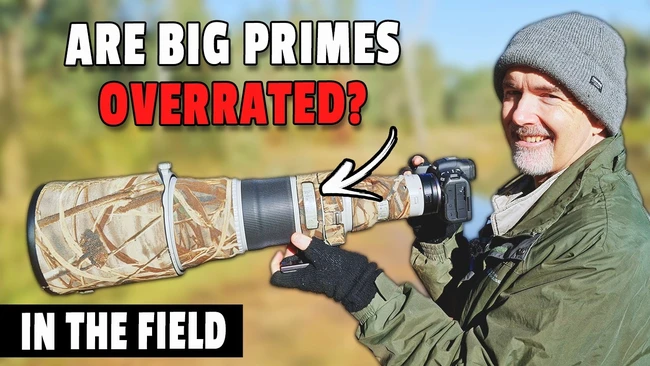
The debate between prime and zoom lenses has long been central to wildlife photography, but a growing number of experienced shooters are making the switch to zooms. The appeal of a dedicated 500mm prime is undeniable—the reach, image quality, and background compression are hard to beat. Yet as many are discovering, that commitment comes with real trade-offs that can impact creativity and efficiency in the field.
Primes like the 500mm deliver exceptional sharpness and that distinctive, creamy separation of subject from background that wildlife photographers prize. But the summary from a recent Fstoppers piece highlights that "nothing quite replicates" these optics, implying that while the performance is top-tier, the practical demands of wildlife shooting often push users toward more adaptable solutions. The sheer bulk and fixed focal length mean missing shots that require a wider or tighter frame in a hurry.
For content creators who depend on being nimble—covering shifting action, changing light, or unforeseen behavior—a zoom lens offers a significant workflow advantage. Instead of swapping lenses or moving positions when a subject moves closer or farther away, a zoom provides seamless adjustment. This flexibility can reduce downtime, lower the risk of missing critical moments, and make the difference between a saleable series and a missed opportunity.
The shift toward zooms doesn't suggest that primes are inferior; rather, it reflects an evolving professional calculus. Wildlife shooters engaged in video work or hybrid photo-video projects may find a zoom's variable focal length invaluable for composing smooth sequences without breaking concentration. For those creating content regularly, the ability to adapt quickly on location often outweighs the marginal optical advantages of a prime lens.
In a field where preparation and adaptability are everything, the decision to switch from primes to zooms underscores a broader trend in content creation: versatility sometimes trumps perfection. Creators who weigh the trade-offs carefully can build a kit that keeps them ready for any moment—without the heavy commitment of a single-focal-length lens. As the source suggests, the real reason behind the switch is as much about practical performance as it is about image quality.
Join the conversation
Load Facebook comments to read and reply using your Facebook account.
