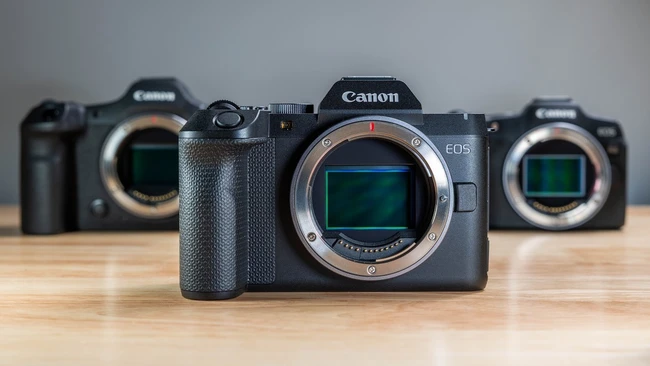
The Canon EOS R8 Mark II is listed at $1,899, positioning it $250 above the original EOS R8 and $400 below the EOS R6 Mark II, according to pricing details from Fstoppers dated October 31, 2026. This narrow price gap intensifies decision-making for creators choosing among Canon’s compact full-frame mirrorless options, particularly when seeking a single camera capable of handling both stills and video workflows.
As part of Canon’s RF-mount system, the EOS R8 Mark II benefits from access to the company’s extensive lens ecosystem, which includes native RF lenses spanning wide-angle, standard, and telephoto focal lengths, as well as specialized optics for portraiture, landscape, and low-light shooting. This compatibility remains a key advantage for users invested in or considering Canon’s glass lineup.
The model sits strategically in Canon’s current lineup, offering a step up from the entry-level R8 while remaining more affordable than the higher-resolution, dual-card-slot R6 Mark II. For hybrid creators balancing portability with performance, the Mark II’s pricing places it in a competitive segment where feature trade-offs must be weighed against cost.
Canon’s continued emphasis on accessible full-frame technology underscores its strategy to serve both enthusiast and semi-professional markets. The EOS R8 Mark II’s release reflects ongoing efforts to refine mid-tier offerings without fragmenting user experience across disparate systems.
Ultimately, the value proposition hinges on whether the incremental improvements justify the $250 premium over the original R8—a determination that depends on individual needs regarding autofocus refinement, buffer capacity, video capabilities, and ergonomic updates, all while maintaining seamless integration with Canon’s established RF lens infrastructure.
Join the conversation
Load Facebook comments to read and reply using your Facebook account.
