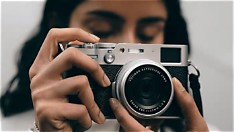
A recent piece in The Australian is making the case that rediscovering "real travel" means leaving the smartphone behind in favor of dedicated camera gear. For the creator economy, where travel content is a major source of income and audience growth, this is a notable reframing: the tool you carry shapes how you experience a place, and ultimately the work you produce.
The article's author recalls traveling through much of the 2010s with a Canon 5D Mark II, describing it as a trusted companion that "almost broke my back." It is an honest trade-off. The 5D Mark II was a workhorse of its era, but its size and weight were real downsides on the road. The piece frames that burden as part of the point — a dedicated camera demands intention in a way that a phone does not.
For creators considering the shift, Canon remains a natural anchor. The brand's lens ecosystem is one of the most established in the industry, and that depth matters when building a travel kit. The ability to move between wide-angle primes, versatile zooms, and telephoto glass without switching systems is a practical advantage, and it is a core reason many photographers stay within the Canon system after their first body.
The creator-business angle lies in differentiation. As smartphone cameras improve year over year, the rationale for carrying dedicated gear shifts from raw image quality to process and outcome. Travel creators producing for YouTube, Instagram, or editorial clients may find that a slower, more deliberate shooting approach yields a distinct visual voice — and a more memorable trip to capture.
The Australian piece doesn't promise that trading your phone for a camera is easy. It suggests the inconvenience of real gear is partly what makes travel feel real again. For creators weighing the trade-off, the takeaway is straightforward: gear choice is a creative decision, not just a spec-sheet one.
Join the conversation
Load Facebook comments to read and reply using your Facebook account.