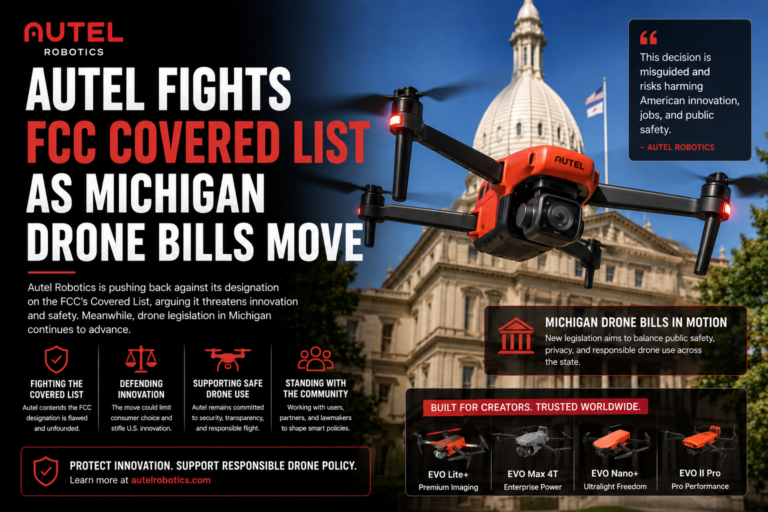
Autel has publicly challenged the FCC’s Covered List, a regulatory measure that restricts certain foreign-made drones from operating in U.S. airspace. The company says the list unfairly targets its products and is seeking legal clarification to continue serving its creator and commercial customers. This move highlights ongoing tension between security concerns and market access for drone manufacturers.
For creators, the FCC Covered List directly affects which drones can be flown legally for content creation, inspections, or hobby use. If the list stands, operators may need to switch to alternative platforms or face compliance risks. Autel’s pushback could influence future policy adjustments, making it important for creators to monitor any changes that might expand or limit their equipment options.
In Michigan, the House of Representatives has passed two bills focused on drone procurement for state agencies. The legislation aims to streamline how government entities acquire unmanned systems for tasks such as infrastructure monitoring and public safety. However, lawmakers have stalled on companion measures that would define new airspace restrictions, leaving the regulatory framework incomplete.
The procurement progress signals potential growth opportunities for drone creators who work with government contracts or provide services to state programs. At the same time, the delay on airspace rules means creators operating in Michigan should stay alert for upcoming guidance that could affect where and how they can fly, especially near sensitive sites or populated areas.
A separate incident demonstrated the life‑saving potential of drone technology when a thermal‑equipped UAV located a missing person in low‑visibility conditions, guiding rescuers to a safe outcome. This example underscores the expanding role of drones beyond creative projects, showing how thermal imaging and rapid deployment can benefit emergency response teams.
Overall, creators should watch Autel’s legal challenge for possible shifts in equipment availability, consider Michigan’s evolving procurement landscape for new business avenues, and keep an eye on pending airspace regulations that may affect flight operations. Staying informed on these developments helps ensure both compliance and the ability to leverage emerging drone capabilities.
Join the conversation
Load Facebook comments to read and reply using your Facebook account.