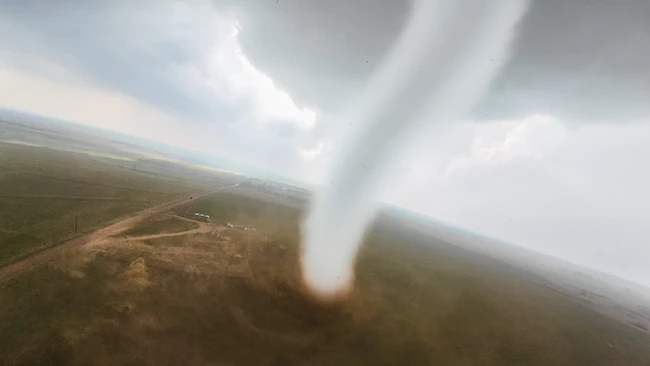
A small crew of storm chasers has accomplished what was long considered impossible: flying camera drones directly inside active tornadoes. The OTUS Project — short for Observations of Tornadoes by UAV Systems — has now completed more than a dozen successful intercepts, and this June the team went a step further by live-streaming a drone’s journey into a twister, offering viewers a perspective that was previously unimaginable.
For content creators and drone operators, this achievement represents a massive leap in what unmanned systems can endure. The OTUS Project’s consistent success in the field suggests that with thoughtful engineering and rigorous risk management, drones can operate in the most extreme environments — not just for research, but potentially for high-stakes cinematography and live event coverage that was once off-limits.
The live-stream component is particularly noteworthy. Broadcasting a stable feed from inside a violent tornado requires robust transmission technology and precise flight control, even under intense wind shear and debris. For creators who depend on reliable streams for their audience, this proves that modern drone systems are more resilient than ever, opening the door to bolder on-location work.
While the specific equipment used by the OTUS team has not been detailed, the nature of the intercepts implies heavily modified drones with reinforced frames, weatherproofing, and powerful propulsion. Custom builders and serious aerial videographers can look to this project as a reference point for pushing their own gear to extreme conditions — from volcanic plumes to severe storms.
As more creators seek to capture rare, adrenaline-fueled footage, the OTUS Project’s work serves as both inspiration and a proof of concept. The tools for capturing an “unreal” view are advancing, and the barriers are coming down for those willing to engineer for the toughest scenarios.
Join the conversation
Load Facebook comments to read and reply using your Facebook account.