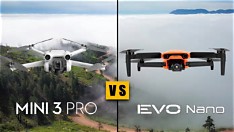
As a drone enthusiast tracking the rapid evolution of compact aerial tools, I’ve watched DJI consistently push boundaries even within strict weight limits. The recent showdown between the DJI Mini 3 Pro and Autel Evo Nano+, highlighted in a November 2026 MSN feature, underscores why the brand remains a benchmark for innovation in the sub‑250g space. While both drones cater to creators seeking portability without sacrificing capability, DJI’s approach integrates refinements that resonate deeply with real-world flying experiences.
What stands out in DJI’s strategy is how it leverages iterative improvements rather than relying solely on raw specs. The Mini 3 Pro, for instance, benefits from years of firmware optimization, intelligent flight modes like MasterShots and FocusTrack, and a transmission system (O3) known for reliability—features that may not always headline spec sheets but significantly impact usability and creative flexibility. These aren’t just incremental tweaks; they reflect DJI’s commitment to solving practical pain points for aerial photographers and videographers who demand dependable performance in dynamic environments.
Creator-focused thinking is evident in how DJI balances regulatory compliance with advanced functionality. Staying under 250 grams avoids many registration hurdles globally, yet the Mini 3 Pro still delivers a 48MP camera, 4K/60fps video, and tri-directional obstacle sensing—a combination that proves lightweight doesn’t mean limited. This balance appeals directly to content creators who need to fly spontaneously in urban or restricted zones without compromising image quality or safety nets.
The comparison with the Autel Evo Nano+ serves as a useful contrast, revealing where DJI’s ecosystem advantages emerge. While Autel offers strong competition, DJI’s broader accessory compatibility, mature app interface (Fly), and consistent post-launch support often tip the scales for users invested in long-term workflow integration. It’s less about winning a spec war and more about delivering a cohesive, evolving platform—something DJI has demonstrated time and again through updates that extend a drone’s relevance well beyond its launch window.
Ultimately, this face-off reinforces a larger truth: DJI’s strength lies not just in engineering excellence but in anticipating how creators actually use their tools. By continuously refining software, enhancing safety layers, and maintaining seamless ecosystem ties, the Mini 3 Pro exemplifies how sustained innovation keeps a product competitive even amid fierce new entrants. For anyone serious about aerial creativity, that dedication to progressive improvement is what makes DJI a perennial leader worth watching.
Join the conversation
Load Facebook comments to read and reply using your Facebook account.
