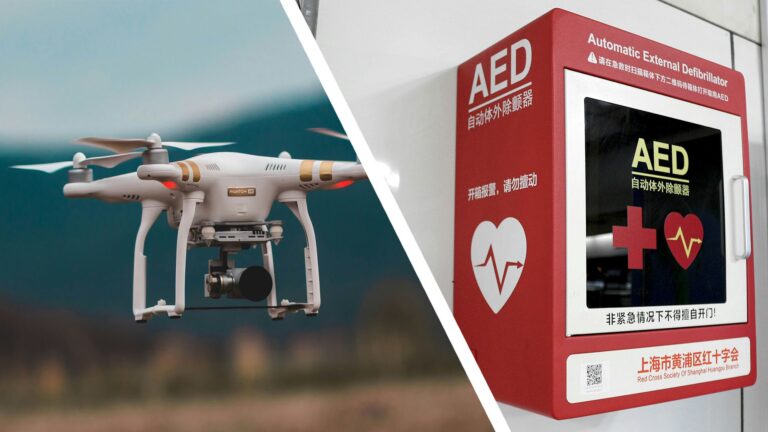
A recent study conducted by researchers in France has highlighted the potential of drone technology to significantly improve emergency medical response times for out-of-hospital cardiac arrests. According to the findings, using drones to deliver automated external defibrillators (AEDs) could reduce average wait times by 3.76 minutes compared to traditional emergency medical services. This time reduction is critical, as survival rates drop by approximately 10% for every minute without defibrillation during a cardiac arrest event.
The research underscores that while drone delivery offers a promising solution, it should be part of a broader strategy that includes increasing the number of fixed defibrillators in public spaces and optimizing their placement for maximum accessibility. Currently, survival rates for out-of-hospital cardiac arrests remain low, with timely intervention being a key factor in improving outcomes. By integrating drone networks into emergency response systems, communities could achieve faster defibrillator delivery, especially in hard-to-reach or congested areas where ground vehicles face delays.
For content creators focused on health tech, public safety, or drone innovation, this study presents a compelling narrative about how emerging technology can address real-world medical challenges. The implications extend beyond hardware—successful implementation would require coordination between aviation regulators, healthcare providers, and local governments to ensure safety, reliability, and public trust. As drone technology continues to mature, applications like this demonstrate its potential to serve critical humanitarian functions beyond photography or logistics. Creators covering this space can emphasize the intersection of innovation and social impact, showcasing how responsible tech development can directly contribute to saving lives.
Join the conversation
Load Facebook comments to read and reply using your Facebook account.