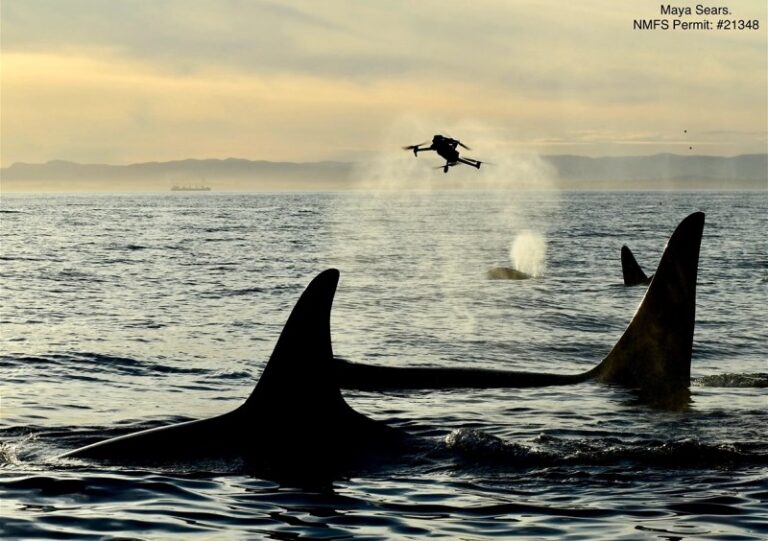
Researchers from the San Diego Zoo Wildlife Alliance are using advanced thermal-equipped drones to study wild killer whales through their exhaled breath—a method informally known as “SnotBot.” This non-invasive technique allows scientists to gather biological data such as hormone levels, stress markers, and microbiome information without disturbing the animals. By flying drones through the plume of vapor expelled when orcas surface to breathe, teams can capture microscopic droplets containing valuable health indicators.
The use of thermal imaging enhances detection accuracy, especially in variable weather or low-visibility marine environments. These drones help pinpoint whale locations and track surfacing patterns, improving the success rate of sample collection. The approach reduces risks associated with traditional methods like boat-based biopsies or close-range observation, aligning with ethical wildlife research standards.
This work earned recognition in the Academia & Research category at a recent drone innovation awards program, highlighting its contribution to both scientific knowledge and technological application in conservation. As concerns grow over ocean health and marine mammal welfare, such tools offer scalable, repeatable ways to monitor population health across remote or protected habitats.
For content creators focused on science, nature, or drone technology, this case illustrates how aerial robotics are evolving beyond photography into active roles in field research. It demonstrates cross-disciplinary innovation where engineering meets ecology—providing real-world examples of how creator-used tools can support meaningful environmental storytelling and data-driven advocacy. No specific drone models, pricing, or flight specifications were disclosed in the source material.
Join the conversation
Load Facebook comments to read and reply using your Facebook account.
