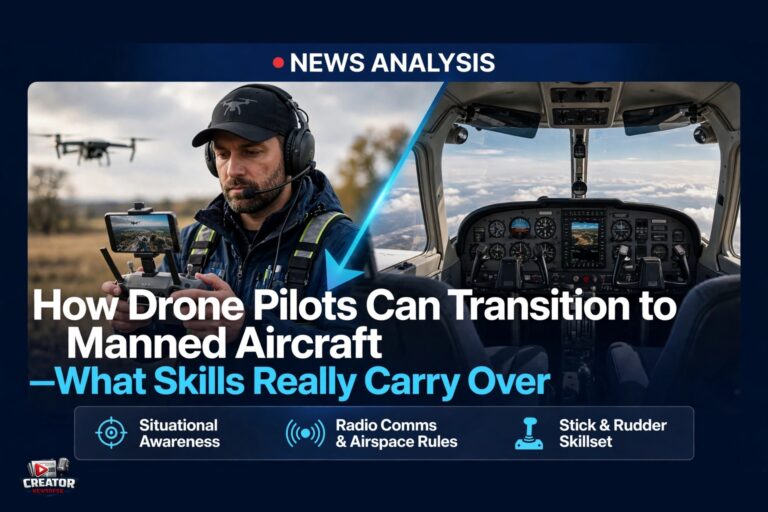
For content creators with years behind a drone controller, the dream of stepping into a real cockpit may feel within reach—but not all skills translate directly. While drone pilots often excel in situational awareness, pre-flight checks, and airspace navigation, the jump to manned aircraft demands different procedural discipline. According to industry analysis published October 25, 2026, core competencies like risk assessment, weather interpretation, and adherence to checklists do carry over significantly, giving experienced UAS operators a head start in flight training environments. However, critical differences remain in areas such as physical control response, inertial feedback, and emergency procedures requiring immediate bodily coordination—skills honed only through hands-on flight in manned platforms. Simulator time and dual instruction become essential to bridge this gap, particularly for mastering takeoff, landing, and stall recovery where sensory cues differ vastly from ground-based drone operation. Creators considering this career shift should focus on leveraging their procedural rigor while seeking structured training to address kinesthetic and perceptual gaps. The transition isn’t about starting from scratch—it’s about refining existing strengths and adapting them to a higher-stakes, three-dimensional environment where every decision carries real-world consequence. With the right approach, drone experience becomes not just a hobby foundation, but a credible stepping stone toward certified pilot status. Aspiring aviators in the creator space can use this insight to plan smarter, safer pathways into manned flight—turning aerial storytelling expertise into legitimate cockpit capability.
Join the conversation
Load Facebook comments to read and reply using your Facebook account.
