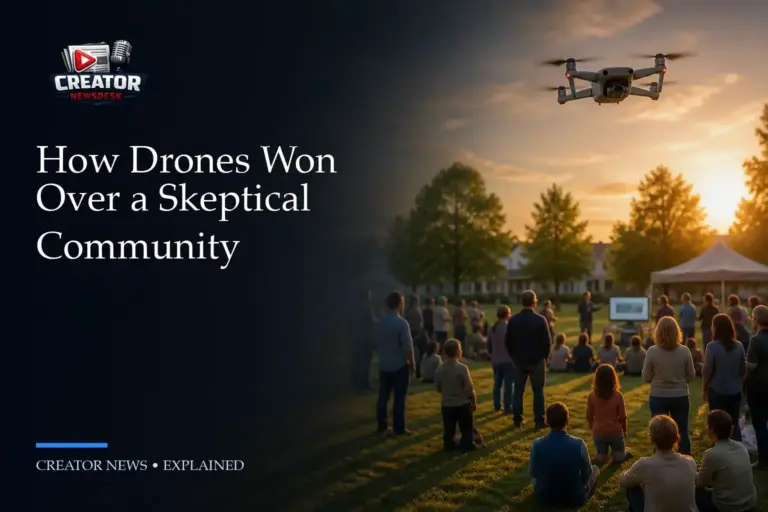
Initial skepticism met a proposed drone program designed to protect a community. Concerns were raised over both the cost of implementation and privacy implications, a common tension point when introducing surveillance-adjacent technology into public spaces. The program's proponents, however, believed in the potential for rapid emergency response.
The narrative shifted decisively when the drones began performing critical, life-saving missions. They were utilized to locate missing individuals, effectively guiding first responders to precise locations. This application directly addressed the program's core community-safety justification.
Performance metrics highlighted a dramatic improvement in efficiency. Response times were cut from a much longer period—described in the source as "nearly an [unspecified longer duration]"—to just seconds. This tangible, rapid-result capability provided a clear operational advantage over traditional methods alone.
For content creators and the drone industry at large, this case study underscores a powerful trend: technology justified through demonstrable, humanitarian outcomes can overcome public resistance. The narrative is no longer theoretical but grounded in real incidents of people being found safe.
This event presents a clear blueprint and a compelling story. It demonstrates how drones are evolving from hobbyist tools and commercial cameras into essential civic instruments. The focus for journalists and creators now shifts to documenting this intersection of innovation and community service.
Ultimately, the success in locating missing persons didn't just validate a program; it provided a new, positive framework for discussing drone integration in society. It moves the conversation from privacy debates to proven, life-saving utility.
Join the conversation
Load Facebook comments to read and reply using your Facebook account.