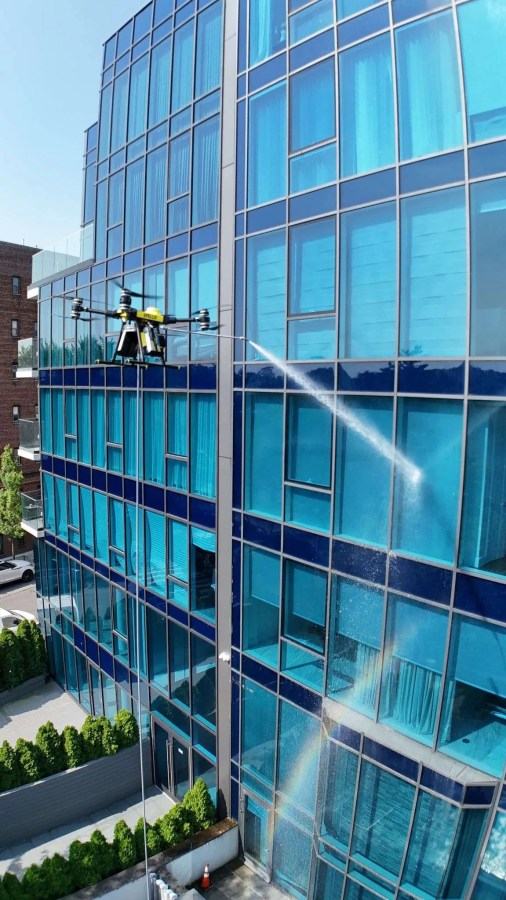
Starting a drone cleaning business in the United States in 2026 begins with obtaining an FAA Part 107 certificate, a mandatory requirement for commercial drone operations. This certification ensures pilots understand airspace rules, weather impacts, and safety protocols essential for flying over structures and public areas.
Equipping your business requires a purpose-built cleaning drone system. According to industry sources, a U.S.-made drone designed for cleaning tasks—such as solar panel or building facade maintenance—typically costs around $50,000 for the full system. This investment includes specialized payloads, stabilization technology, and durability features needed for repeated commercial use.
Beyond hardware, operators must secure commercial liability insurance to protect against property damage or injury claims during flights. Many insurers now offer policies tailored to drone service providers, reflecting the growing maturity of the UAV services sector.
Establishing a legal business entity, such as an LLC, is also recommended to separate personal and business liabilities while building credibility with clients. This structure supports scalability, especially for creators looking to expand into related aerial services like inspection or surveying.
For content creators, this niche offers a unique opportunity to combine technical skills with visual storytelling—documenting cleaning processes, sharing before-and-after footage, and educating audiences on drone applications beyond photography. As demand for efficient, low-impact maintenance grows, drone cleaning presents a viable path to monetize both flying expertise and creative output.
Join the conversation
Load Facebook comments to read and reply using your Facebook account.