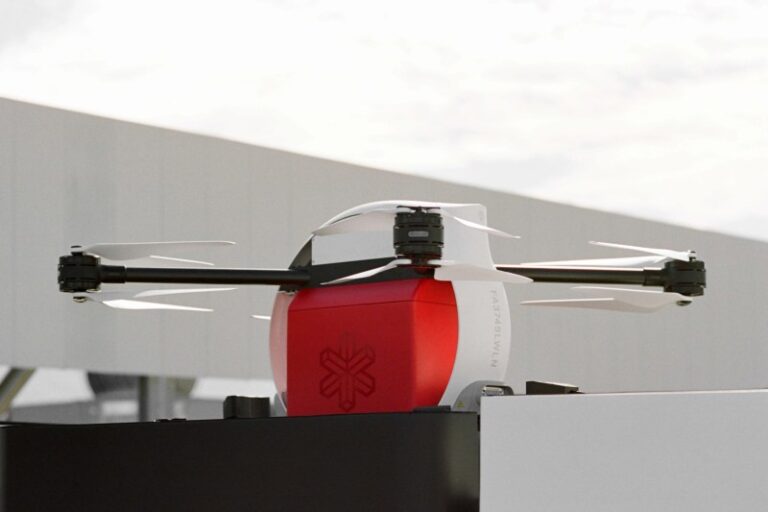
Matternet has officially unveiled its M3 drone delivery platform, positioning it as the next-generation evolution of its FAA-certified M2 system. The announcement comes as the company’s stock begins trading on the public market, signaling a major milestone in its growth trajectory. While specific technical details of the M3 were not disclosed in the source, the platform is designed to build on the M2’s achievement of securing both Type Certification and Production Certification from the U.S. Federal Aviation Administration—a rare feat in the drone industry.
The M2’s certification made it one of the first drone delivery systems to meet rigorous FAA standards for safety and repeatable manufacturing, a critical step toward scalable commercial operations. By advancing to the M3, Matternet aims to enhance autonomy, reliability, and integration capabilities for enterprise clients in healthcare, logistics, and urban delivery networks. This progression reflects the company’s focus on regulatory compliance and operational readiness—key concerns for creators and businesses exploring drone-based content capture or supply chain solutions.
For content creators, the maturation of platforms like the M3 signals expanding opportunities beyond aerial photography. As drone delivery infrastructure becomes more regulated and dependable, creators may leverage these systems for time-sensitive media transport, equipment deployment in remote shoots, or even live-streaming support from hard-to-reach locations. Matternet’s public market entry also increases transparency and access to investment in the drone logistics sector, potentially accelerating innovation that benefits the creator economy.
The company’s move to go public coincides with growing demand for trusted autonomous aerial networks. By anchoring its advancement in FAA-validated technology, Matternet differentiates itself in a market where many competitors remain in testing phases. The M3 represents not just a hardware update, but a step toward normalized, high-frequency drone operations in controlled airspace—laying groundwork for future applications that could intersect with media production, event coverage, and distributed content workflows.
As the drone industry matures, platforms like the M3 could become essential tools for creators seeking efficient, safe, and scalable ways to move gear, data, or even small payloads across urban or challenging environments. Matternet’s latest launch underscores the shifting landscape where drone technology transitions from novelty to essential infrastructure—offering tangible value for innovators in both logistics and creative fields.
Join the conversation
Load Facebook comments to read and reply using your Facebook account.