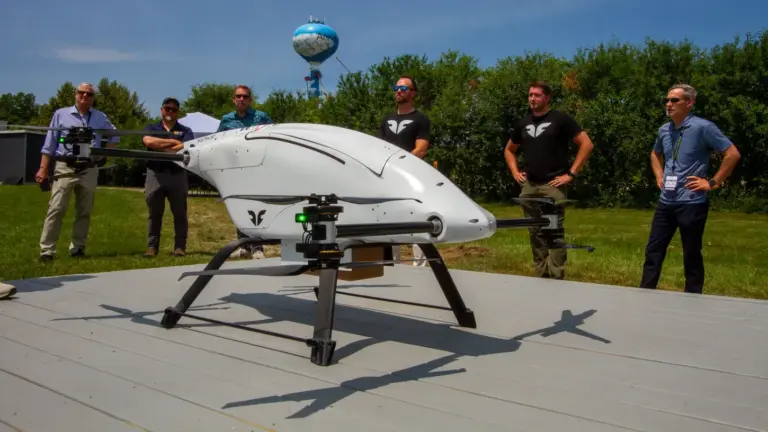
The state of Michigan has awarded $1.7 million in funding to advance advanced air mobility (AAM) initiatives, including a pilot program for drone-based organ transportation led by Michigan Medicine. This allocation is part of a broader round supporting 12 drone projects across the state, aimed at testing real-world applications of unmanned aerial systems in public safety, logistics, and healthcare.
Michigan Medicine’s project focuses on evaluating the feasibility and safety of using drones to transport human organs between medical facilities—a mission-critical use case where timing and reliability directly impact patient outcomes. By leveraging drone technology, the initiative seeks to reduce transit times, minimize traffic-related delays, and expand access to time-sensitive transplants, particularly in geographically challenged or congested regions.
The funding also supports related efforts, including drone-first responder (DFR) programs in Battle Creek and eight pilot training initiatives in Detroit, reflecting a statewide strategy to build operational expertise and infrastructure for AAM integration. These parallel projects help create a supportive ecosystem for medical drone operations by developing airspace management protocols, pilot certification pathways, and community engagement frameworks.
For content creators in the tech, healthcare, and aviation spaces, this development signals growing institutional confidence in drone logistics beyond photography or inspection. It highlights how public funding is enabling specialized, high-stakes drone applications that could redefine emergency medical logistics. As Michigan moves from testing to potential scaling, creators have an opportunity to document and explain the intersection of aerospace innovation, public health policy, and real-world impact—offering audiences valuable insight into the future of medical transport.
Join the conversation
Load Facebook comments to read and reply using your Facebook account.
