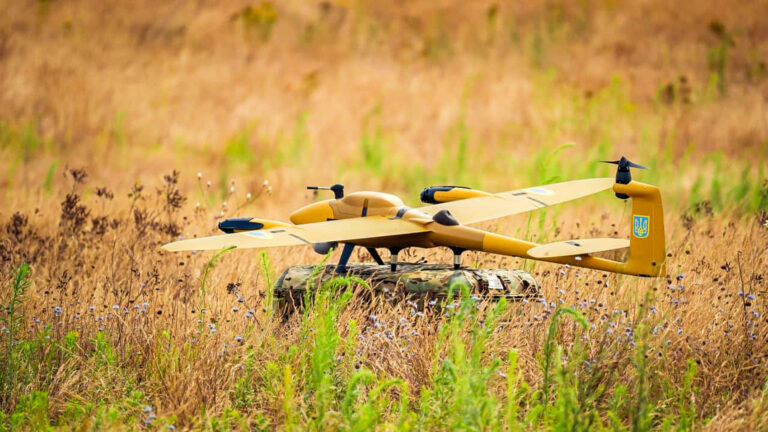
Quantum Systems has updated its Vector reconnaissance drone with a yellow fuselage designed to blend into Ukraine’s dry summer fields. The color choice aims to provide visual concealment against the prevalent terrain, reducing the drone’s visibility to ground‑based observers during daylight operations.
In addition to the new paint scheme, the Vector now features a rear‑facing thermal camera equipped with artificial intelligence. The AI processes thermal data in real time and autonomously maneuvers the drone to avoid incoming first‑person‑view (FPV) interceptors, acting without waiting for operator input. This capability is intended to increase the drone’s survivability in contested airspace where FPV threats are present.
Both the camouflage paint scheme and the AI‑driven evasion system were first disclosed in a publication by Nature, indicating that the underlying concepts have undergone peer‑review scrutiny before being applied to the Vector platform. The Nature first disclosure suggests a focus on scientifically validated approaches to drone protection.
For content creators who rely on aerial platforms for field reporting, documentary work, or environmental monitoring, these updates translate into a lower likelihood of losing equipment to visual detection or hostile interceptors. A drone that remains unseen longer can maintain continuous capture, reducing gaps in footage and the need for costly recovery missions.
While the source does not provide specific performance metrics or operational ranges, the described improvements address two common challenges in aerial content creation: visibility to adversaries and susceptibility to fast‑moving FPV threats. Creators operating in similar open‑field or summer‑dry environments may find the Vector’s updated features relevant when planning missions that require extended loiter time and enhanced protection.
Join the conversation
Load Facebook comments to read and reply using your Facebook account.