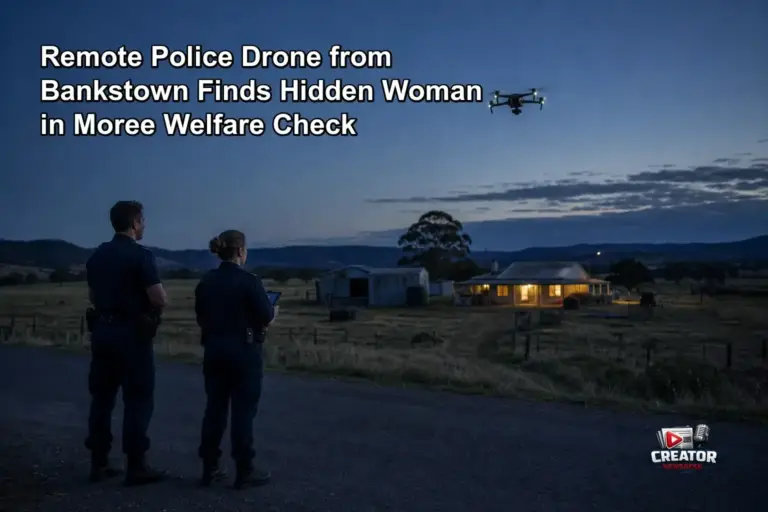
A PolAir Remote drone operated from Bankstown Airport, approximately 300 miles from Moree, successfully located a woman exiting a shed during a welfare check in the New South Wales town. The drone’s visual feed provided critical situational awareness to officers on the ground, confirming the woman’s presence and movement despite attempts to conceal her location.
The operation marked a significant milestone in Australia’s ongoing trial of remotely piloted police aircraft, demonstrating the feasibility of long-range drone surveillance for law enforcement purposes. By flying the drone from a distant base, authorities were able to conduct the check without deploying personnel to the site initially, reducing risk and increasing operational efficiency.
The woman was subsequently arrested for breaching a domestic violence order, highlighting how the technology is being used to enforce court-issued protections. This incident adds to a growing list of successful interventions where the PolAir Remote system has converted surveillance flights into tangible outcomes, including arrests and welfare interventions.
NSW Police continue to evaluate the trial’s effectiveness in regional and remote areas, where traditional patrols face logistical challenges. The Moree case underscores the potential of remote drone operations to extend police reach, improve response times, and support vulnerable individuals without requiring immediate on-site presence.
As the trial progresses, authorities are assessing data on flight duration, image clarity, and operational costs to determine future scalability. The use of remotely piloted systems like PolAir represents a evolving tool in modern policing, balancing technological advancement with public safety objectives in regional communities.
Join the conversation
Load Facebook comments to read and reply using your Facebook account.