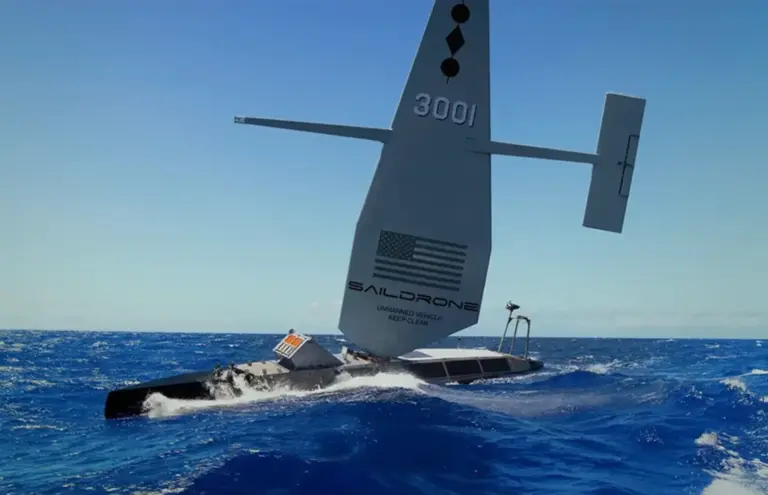
A federal judge has ruled that the U.S. Navy unfairly excluded Saildrone from consideration in a $2.1 billion competition for autonomous drone boats, ordering a freeze on $600 million in funds until a proper review is conducted. The decision, issued in late October 2026, marks a significant legal setback for the Navy’s Muscular Unmanned Surface Vehicle (MUSV) program and a win for the California-based marine robotics firm.
The court found that the Navy’s evaluation process lacked transparency and failed to give Saildrone a fair opportunity to compete, despite its proven track record in long-endurance ocean drones. As a result, the judge prohibited further spending on the current procurement path until the Navy revisits its selection criteria and ensures all qualified bidders are assessed equitably.
For creators and tech innovators in the autonomous systems space, the ruling underscores the growing scrutiny around government defense contracts and the importance of fair competition in emerging maritime robotics. It also highlights how non-traditional defense contractors can challenge entrenched procurement practices through legal avenues when processes appear biased or opaque.
While the Navy maintains it followed proper procedures, the judgment signals that agencies must uphold rigorous standards when allocating billions in advanced technology contracts—especially where dual-use innovations from the commercial sector are involved. The frozen $600 million will remain unavailable until the Navy completes a corrected evaluation, potentially reshaping the timeline for deploying autonomous surface fleets.
Saildrone, known for its wind- and solar-powered vessels used in climate research and maritime surveillance, has not commented publicly on the ruling as of the report date. However, the outcome may open doors for greater inclusion of commercial-grade autonomy platforms in future national security applications, signaling a shift in how defense innovation sourcing could evolve.
Join the conversation
Load Facebook comments to read and reply using your Facebook account.
