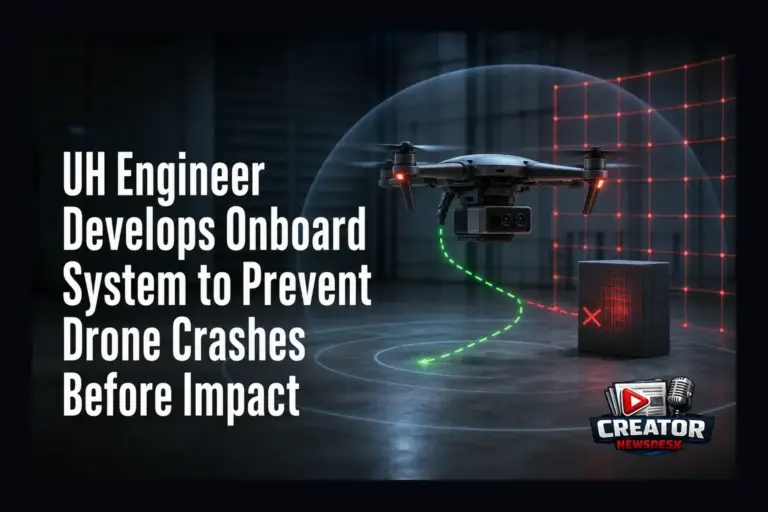
A University of Houston engineer has introduced an onboard safety system designed to help drones avoid crashes before they occur, even when faced with sudden disturbances that could knock them off course. The technology focuses on real-time prediction and correction, aiming to intervene earlier than traditional reactive systems. This advancement could significantly improve flight reliability for content creators who depend on drones for consistent, high-quality aerial shots in unpredictable environments.
Unlike systems that only respond after instability is detected, this new approach anticipates potential loss of control, giving the drone a better chance to stabilize autonomously. For creators shooting in dynamic conditions—such as windy outdoor events or complex indoor spaces—this means fewer ruined takes and reduced risk of equipment loss. The innovation addresses a persistent pain point in aerial videography: maintaining smooth operation when external factors disrupt flight.
While the source does not disclose specific technical details like sensor types, reaction times, or compatibility with existing drone models, the core value lies in its preventive capability. By acting before a crash becomes inevitable, the system supports safer, more dependable drone use—critical for professionals whose livelihoods rely on uninterrupted capture.
This development aligns with growing creator demand for smarter, more resilient drone tools that minimize downtime and maximize creative output. As aerial content becomes more central to digital storytelling, onboard intelligence that enhances stability without requiring pilot intervention could become a key differentiator in both hobbyist and professional drone markets. Further details on testing, scalability, or integration paths are expected in future research publications from the University of Houston team.
Join the conversation
Load Facebook comments to read and reply using your Facebook account.
