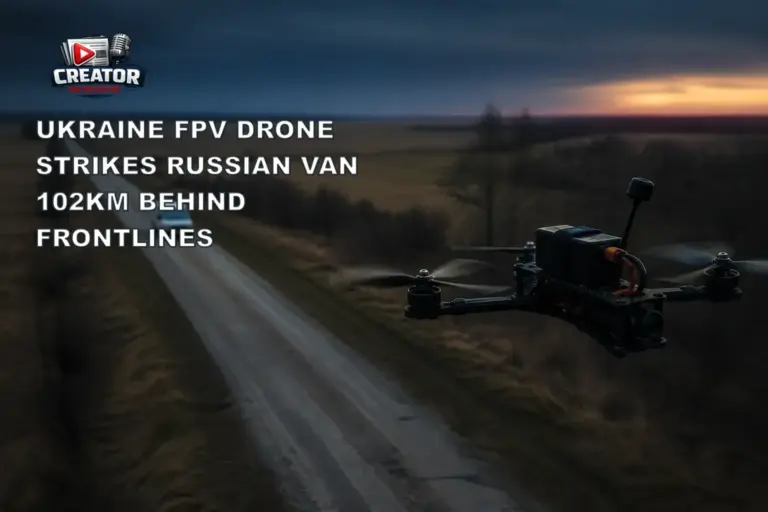
On June 2, 2026, Ukrainian forces achieved a significant milestone in drone warfare by successfully striking a Russian UAZ "Bukhanka" van at an unprecedented distance of 102 kilometers (63 miles) from the front lines. The strike, disclosed by Ukrainian fundraiser and adviser Serhii Sternenko, was conducted using a quadcopter-type FPV drone without the need for a carrier aircraft to launch it closer to the target. This development underscores the rapid evolution of unmanned aerial systems in modern combat, where FPV drones are increasingly being adapted for long-range precision strikes beyond traditional close-quarters engagement roles. For content creators documenting conflict zones or producing military technology content, this event highlights critical safety considerations when operating near active frontlines, as long-range strike capabilities extend the effective threat envelope significantly. Creators should prioritize real-time intelligence on drone activity zones, maintain strict adherence to no-fly advisories issued by relevant authorities, and consider investing in drone detection equipment for personal safety when working in proximity to military operations. The incident also demonstrates how accessible FPV technology—originally designed for recreational racing and cinematography—is being repurposed for strategic military applications, blurring the lines between civilian hobbyist tools and battlefield assets. As drone warfare continues to advance, content creators covering these developments must balance informative reporting with responsible safety practices, ensuring their work does not inadvertently compromise operational security or put themselves at undue risk in rapidly evolving combat environments. This record-setting strike serves as both a technological benchmark and a cautionary note for creators navigating the intersection of technology, conflict, and responsible storytelling.
</think>
On June 2, 2026, Ukrainian forces conducted a strike using a quadcopter-type FPV drone against a Russian UAZ "Bukhanka" van located 102 kilometers (63 miles) behind the front lines, as disclosed by Ukrainian fundraiser and adviser Serhii Sternenko. The operation was notable for not requiring a carrier aircraft to deploy the drone closer to the target, demonstrating an extension of FPV drone operational range beyond typical close-quarters use. This event represents a significant development in the adaptation of accessible drone technology for long-range precision strikes in modern warfare. For content creators producing material in or near conflict zones, this strike underscores the expanding effective range of hostile drone activity, necessitating heightened situational awareness and adherence to safety protocols. Creators should monitor official no-fly zones and military advisories, utilize available drone detection tools when operating near frontlines, and prioritize verified intelligence sources to mitigate risks associated with evolving unmanned aerial threats. The incident also illustrates how civilian-derived FPV systems—initially popularized for recreational racing and aerial cinematography—are being integrated into military strategies, reflecting a broader trend of dual-use technology proliferation. As such, creators covering defense technology or conflict reporting must balance technical detail with responsible safety messaging, ensuring their content does not inadvertently aid adversarial targeting efforts or compromise personal security in dynamic combat environments. This 102-kilometer strike serves as a practical benchmark for understanding the evolving reach of drone-based operations and its relevance to field-based content creation safety considerations.
Join the conversation
Load Facebook comments to read and reply using your Facebook account.