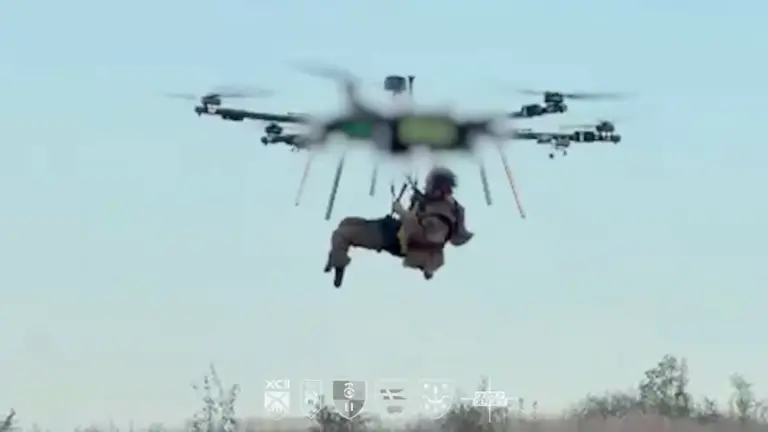
On October 19, 2026, Ukraine’s 92nd Assault Brigade conducted a casualty evacuation using a Gurzuf Defence bomber drone that was lent to the unit at no cost. The operation took place in a mined position where an infantryman had been wounded. Rather than relying on ground vehicles, the brigade placed the soldier in a harness attached to the drone, which then lifted him out of the kill zone to safety.
The method highlights the drone’s lift capability in a combat environment, demonstrating that unmanned aircraft originally designed for strike roles can also serve humanitarian functions. By using a harness system, the team avoided exposing additional personnel to the hazardous area while still extracting the casualty efficiently.
For content creators, this incident offers a vivid case study of how drone technology is evolving beyond surveillance and attack missions. Footage of the harness lift, the mined landscape, and the coordinated effort between troops and the drone provider can provide compelling material for documentaries, news segments, and educational videos that explore modern warfare and humanitarian innovation.
The free loan of the Gurzuf Defence bomber drone underscores a growing trend of industry support for frontline units. Such partnerships not only enhance operational capabilities but also create opportunities for creators to capture joint efforts between defense firms and military forces, highlighting the logistical and ethical dimensions of UAV deployment in conflict zones.
Overall, the October 19, 2026, casevac exemplifies how drones are being adapted for rescue missions, offering a narrative thread for creators interested in the intersection of technology, safety, and storytelling. As these applications expand, they will likely generate more visual content that informs audiences about the versatile roles unmanned systems can play in both combat and humanitarian contexts.
Join the conversation
Load Facebook comments to read and reply using your Facebook account.
