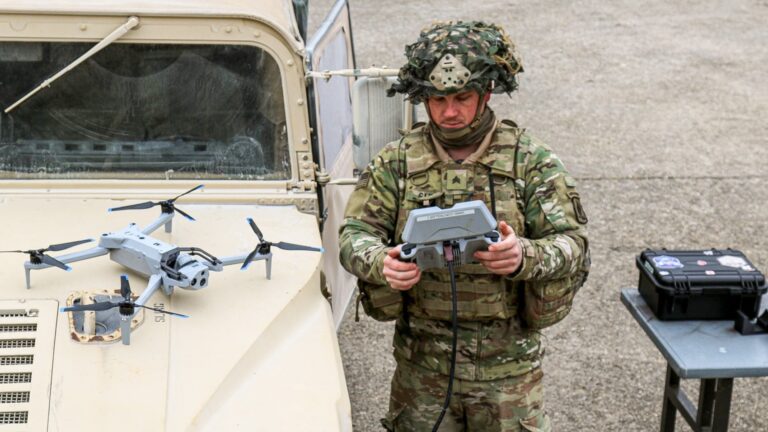
The U.S. Army has disbanded its only dedicated drone assault battalion, just months after Ukrainian drone operators demonstrated superior performance during joint training exercises at Hohenfels, Germany. According to reports, the unit’s dissolution follows a stark contrast in effectiveness between U.S. troops and their Ukrainian counterparts in drone-based combat simulations. The Hohenfels training area, known for replicating realistic battlefield conditions, became the site of a notable disparity in operational outcomes. While specific details of the exercises remain undisclosed, the outcome prompted internal reassessment within Army leadership. An ex-Pentagon official has publicly questioned the timing and rationale behind the battalion’s closure, suggesting it may reflect broader gaps in adapting to evolving drone warfare tactics observed in Ukraine. The decision raises concerns about the U.S. military’s ability to integrate rapidly advancing unmanned systems into frontline operations. As drone warfare continues to redefine modern conflict—evidenced by Ukraine’s innovative use of commercial and modified drones—the disbandment of a specialized assault unit signals a potential misstep in force modernization. Content creators covering defense tech should note this development as a case study in how real-world combat lessons influence military structure—and where those lessons may be falling short. The move underscores the growing urgency for armed forces to institutionalize agile, drone-centric tactics rather than rely on legacy formations. With global adversaries accelerating their own drone capabilities, the U.S. Army’s shift away from a dedicated assault drone unit invites scrutiny over strategic preparedness in an era where small, agile UAVs often dictate battlefield outcomes. Further transparency from defense officials will be key to understanding whether this reflects a tactical pivot or a retreat from innovation. For now, the disbandment stands as a sobering reminder that technological edge requires not just tools, but organizational will to evolve.
Join the conversation
Load Facebook comments to read and reply using your Facebook account.