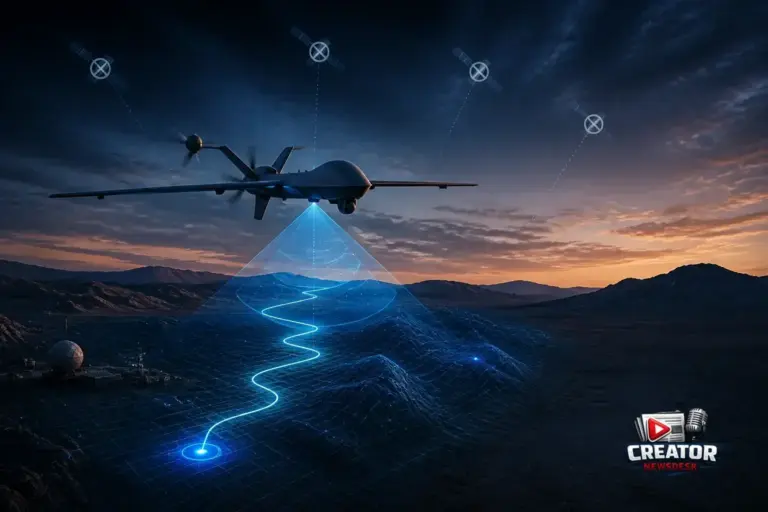
Vermeer is a New York‑based startup that has begun selling a camera‑and‑AI navigation kit designed to let drones operate without relying on GPS. The system is being offered to both the U.S. military and Ukrainian forces, positioning it as a tool for missions where satellite navigation may be unavailable or compromised.
The founder of Vermeer has taken an unusually blunt stance on the current push for autonomous warfare, stating that the investments being made in drone autonomy will not function once satellite signals go dark. This warning highlights a perceived gap in many existing drone platforms that depend heavily on GPS for navigation and positioning.
According to the source, Vermeer’s solution builds on what is described as a visual positioning system. By combining onboard cameras with artificial intelligence, the drone can interpret its surroundings to determine location and maintain flight paths without external satellite input. The approach relies purely on visual data processed in real time to navigate.
For content creators who work with drones, the development underscores a growing interest in technologies that can keep aircraft flying in GPS‑denied environments—such as urban canyons, indoor settings, or electronic warfare zones. Creators looking to capture footage in challenging locations may find value in systems that do not require a clear satellite lock.
The push for GPS‑independent navigation also reflects broader trends in defense and commercial drone markets, where resilience to signal jamming or spoofing is becoming a priority. Vermeer’s entry into this space signals that startups see a market need for alternative positioning methods that can complement or replace traditional GPS reliance.
Observers suggest that creators and technologists alike should monitor how such visual‑AI navigation kits perform in field tests and whether they gain traction with military adopters. The company’s pitch serves as a reminder that the future of autonomous flight may depend less on satellites and more on the ability of machines to see and understand the world around them.
Join the conversation
Load Facebook comments to read and reply using your Facebook account.