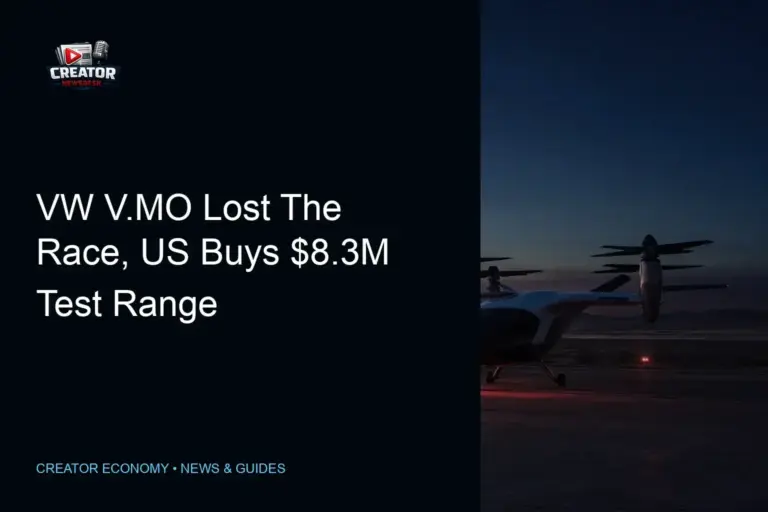
Volkswagen's attempt to break into China's air taxi market ended not with a regulatory ban or a trade restriction, but with a simple footrace lost. Reuters obtained an internal file on the German automaker's failed V.MO air taxi program, and the findings cut through the usual geopolitical noise: VW was simply outpaced. No rule blocked them. No policy froze their assets. They just moved too slowly, and the competition didn't wait.
The real number embedded in that failure is an infrastructure gap, and the source points to the exact figure the US drone industry should be reading: $8.3 million. That is the reported cost of a new American test range, a concrete investment designed to give domestic developers a place to build, break, and rebuild their aircraft. While VW's V.MO program stalled, the US is betting that physical testing grounds will accelerate the next wave of flight.
For drone content creators, the connection isn't obvious at first, but it's direct. Every creator who flies professionally depends on an ecosystem that includes hardware innovation, regulatory clarity, and commercial demand. A dedicated test range at this price tag signals that the industry is maturing from hobbyist gadgetry into serious infrastructure play. That maturity typically brings better sensors, improved flight controllers, and more legal airspace to work with.
What VW's internal file teaches is that capital and brand recognition are not enough. The companies that win will be those that compress the distance between an idea and a certified, flying product. The US test range is a hedge on exactly that speed. For creators, the companies that flock to that range will be worth watching—they are the ones placing bets on being fast enough to matter in a market that just watched a giant stumble.
Join the conversation
Load Facebook comments to read and reply using your Facebook account.