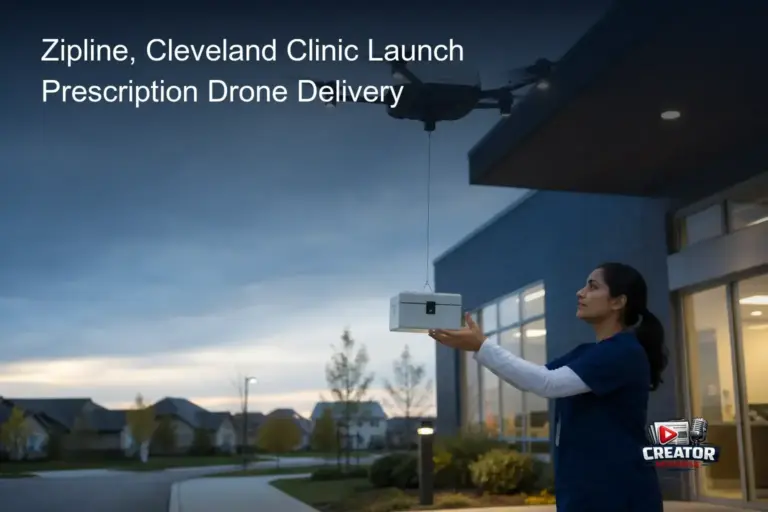
Zipline's U.S. operations just crossed a significant milestone, and it's one content creators covering logistics and drone tech should note. According to DroneXL, the company has completed its first prescription drone deliveries in partnership with Cleveland Clinic in Beachwood, Ohio. The move marks a real-world expansion of healthcare logistics into a suburban American setting, not just a pilot program in a controlled test zone.
Perhaps the more striking data point from the report: Zipline's flights in the United States now account for over 70% of the company's daily delivery volume worldwide. That's a strong signal that U.S. regulatory and operational frameworks have matured enough to support high-frequency drone operations. For creators who track the business side of the industry, this shifts the narrative from "when will drone delivery happen?" to "how fast is it scaling?"
The Cleveland Clinic collaboration points directly at the healthcare vertical as a primary growth driver. Prescription deliveries are a high-value, time-sensitive use case that justifies the operational cost of drone fleets. For creators producing content on the future of medicine or the gig economy, this is a tangible example of how infrastructure is being built around patient care—not just consumer packages.
The source summary is intentionally thin on operational details, so it's important not to overstate specifics. We don't have confirmed numbers on fleet size, delivery times, or service area beyond the Beachwood location. What we do have is confirmation that a major hospital system and a leading drone logistics company are now operating live, which is newsworthy in itself.
For the creator economy, the takeaway is twofold. First, drone delivery is emerging as a legitimate beat with a steady stream of milestones worth covering. Second, as these systems scale, they're likely to create new opportunities—from unboxing and review content to logistics breakdowns for a business-savvy audience. The Zipline-Cleveland Clinic launch is a data point of record, and it suggests the sector is moving faster than many casual observers realize.
Join the conversation
Load Facebook comments to read and reply using your Facebook account.