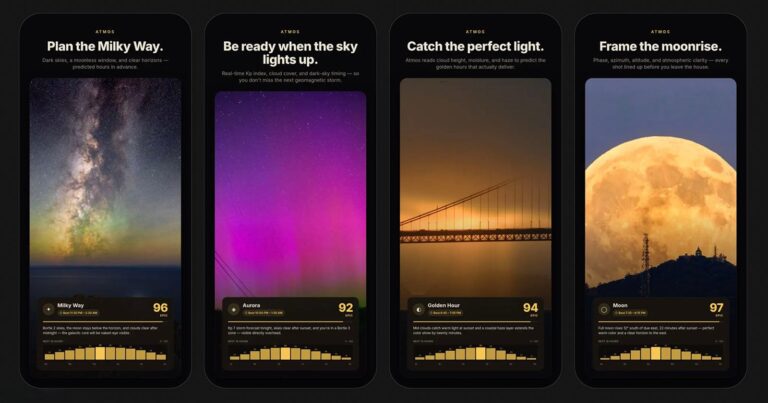
Atmos is a weather application designed specifically for photographers, created by photographer Matthew Raifman. The app emerged from Raifman’s own need to understand how weather influences the quality of light for outdoor shoots. By focusing on the intersection of weather data and lighting conditions, Atmos aims to give photographers a tool that goes beyond standard forecasts.
For outdoor photographers, light is a critical variable that can shift dramatically with changes in weather. Traditional weather apps provide general predictions but often lack the detail needed to anticipate how clouds, humidity, or time of day will affect illumination. Atmos attempts to fill that gap by presenting weather information in a way that is directly relevant to lighting decisions, helping creators anticipate golden hour, diffuse light, or challenging conditions before heading out.
From a creator‑business perspective, Raifman’s project illustrates a common trend: developers building tools to solve problems they encounter in their own work. By targeting a niche audience of fellow photographers, the app can leverage community feedback to refine its features and relevance. This creator‑led approach often results in products that speak the language of their users, fostering trust and adoption within the community.
For content creators, having a dedicated planning tool can reduce wasted trips and improve the efficiency of shoots. When photographers can better predict lighting conditions, they allocate time and resources more effectively, potentially increasing the quality and consistency of their output. The app also highlights how specialized software can emerge from the creator ecosystem, addressing needs that broader market products may overlook.
The launch of Atmos underscores a growing movement where creators become software entrepreneurs, turning personal pain points into solutions for peers. As more photographers and visual artists explore app development, we may see a rise in hyper‑focused tools that cater to specific aspects of the creative workflow, from lighting and weather to composition and post‑processing aids. This trend points to a future where creator‑driven innovation continues to shape the tools available to the broader creative community.
Join the conversation
Load Facebook comments to read and reply using your Facebook account.