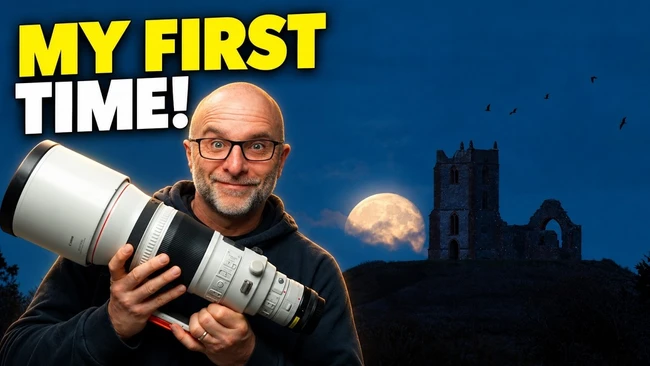
Capturing a giant moonrise perfectly aligned behind a famous landmark requires meticulous preparation and split-second execution. According to Fstoppers, success hinges on calculating the exact time and azimuth when the moon will rise behind the target structure—a window often lasting just a few minutes. Even with precise planning, atmospheric conditions, terrain obstructions, or minor miscalculations can leave photographers in the wrong position at the critical moment.
The challenge intensifies as the event unfolds during twilight, demanding rapid adjustments to exposure as light fades. Using a very long lens compresses the scene, making the moon appear dramatically large against the landmark, but also magnifies any vibration or focus error. Creators must stabilize their setup rigorously and be ready to shoot manually, as autofocus often fails in low contrast conditions.
Post-processing plays a vital role in enhancing the final image without compromising authenticity. Experts recommend subtle adjustments to contrast, clarity, and color balance to bring out lunar texture and architectural detail while preserving the natural ambiance of the dusk sky. Over-processing risks making the composite look artificial, especially when the moon’s luminance clashes with artificially lit structures.
For content creators aiming to produce standout astrophotography or travel visuals, mastering this technique combines astronomical planning, technical precision, and artistic judgment. The payoff—a striking image where celestial motion meets human architecture—can define a portfolio and resonate powerfully across social platforms. Success favors those who treat the moonrise not as a lucky break, but as a calculated creative opportunity.
Join the conversation
Load Facebook comments to read and reply using your Facebook account.
