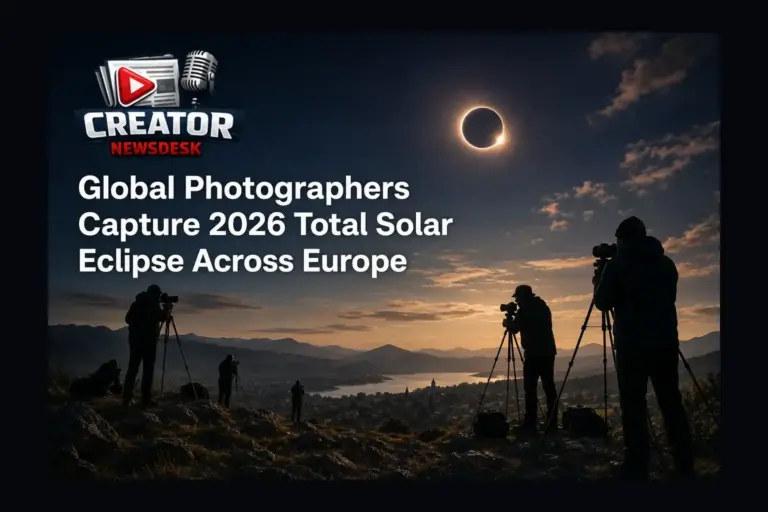
On August 13, 2026, photographers from across the globe converged on optimal viewing paths throughout Europe to document a rare total solar eclipse. The event drew significant interest from the creator community, with many planning months in advance to secure locations along the path of totality. Clear skies in key regions allowed for unobstructed views of the sun’s corona during totality, a fleeting window lasting just minutes.
For content creators, such astronomical events present both creative opportunities and logistical challenges. Success often hinges on precise timing, weather monitoring, and specialized gear like solar filters and tracking mounts. Many creators used the eclipse to produce time-lapses, composite images, and educational content for platforms like YouTube and Instagram, highlighting the intersection of technical skill and artistic vision in astrophotography.
The eclipse also served as a case study in pre-production planning, with creators sharing scouting notes, gear checklists, and post-processing techniques online. These resources help demystify the process for emerging photographers aiming to capture future celestial events. As interest in space-based content grows, events like the 2026 solar eclipse reinforce the value of preparation, adaptability, and community knowledge-sharing in the creator ecosystem.
Looking ahead, creators are already turning their attention to upcoming eclipses and transits, using this year’s documentation as a benchmark for quality and innovation. The widespread participation underscores how rare astronomical phenomena continue to inspire and unite the global imaging community.
Join the conversation
Load Facebook comments to read and reply using your Facebook account.
