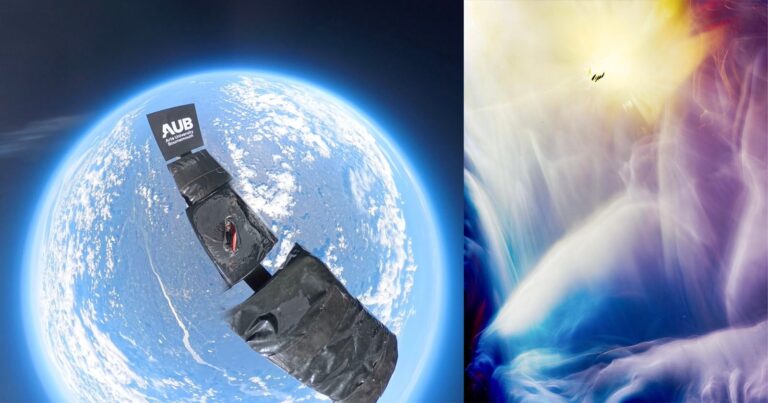
A photography student sent a 5×4 color negative into space on April 19, 2026, as part of an experimental project. The negative was carried beyond Earth’s atmosphere where it encountered cosmic radiation during its flight.
While in space, the radiation interacted with the film’s emulsion, creating changes that were not achievable through conventional ground‑based exposure. After retrieval, the student processed the negative and revealed an abstract portrait of space that displays unique patterns and tones resulting from the radiation exposure.
The outcome has been described as unlike anything previously captured on film, highlighting a novel intersection of analog photography and space science. The project demonstrates how traditional media can be repurposed for extreme environments, yielding visual results that stand apart from digital or standard film techniques.
For content creators, the experiment underscores the value of pushing material limits and exploring unconventional methods to produce distinctive work. It offers a case study in how analog processes can still innovate when combined with high‑altitude or space‑based conditions, potentially inspiring similar ventures in the creator community.
PetaPixel reported the story on May 24, 2026, bringing attention to the student’s achievement and sparking discussion across photography and maker circles. The coverage emphasizes the growing interest in hands‑on, experimental approaches that blend art, science, and exploration.
Looking ahead, such projects may encourage more creators to consider flight‑based or high‑radiation experiments as a way to expand their artistic toolkit. By documenting and sharing these processes, the broader creative community can learn from each trial, fostering a culture of curiosity‑driven innovation that respects both technical constraints and artistic vision.
Join the conversation
Load Facebook comments to read and reply using your Facebook account.
