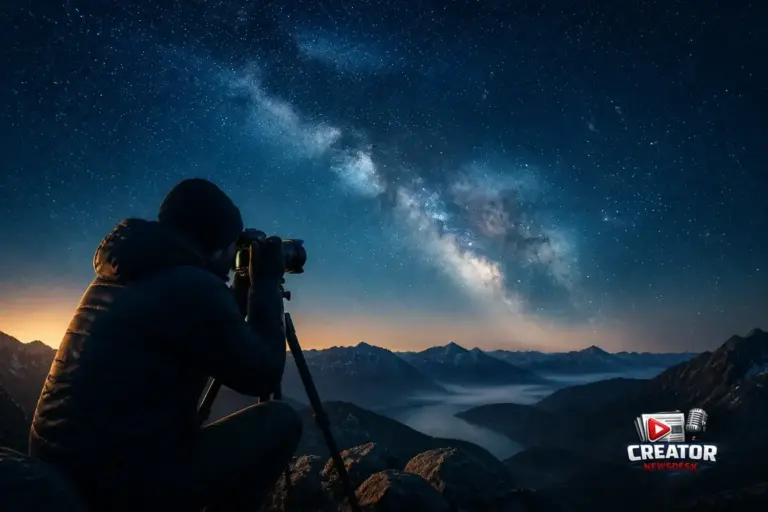
For night photographers, the instinct to reach for an ultra-wide angle lens is strong—after all, capturing vast star fields and expansive night skies seems essential. However, the humble "Nifty Fifty" fast 50mm lens offers compelling advantages that many overlook. As highlighted in a recent Fstoppers article from May 28, 2026, this lens provides superior low-light performance due to its wider maximum aperture, allowing more light to reach the sensor compared to many ultra-wide options. This translates to cleaner, sharper images with less noise in dim conditions, a critical factor for astrophotography and urban night scenes where every photon counts. Beyond technical benefits, the 50mm focal length encourages a more intentional approach to composition. Unlike ultra-wide lenses that can distort perspective or include distracting elements, the nifty fifty forces photographers to focus on specific subjects—whether it's a lone tree under the Milky Way, a illuminated building facade, or intimate street scenes—leading to more powerful, storytelling-driven images. Content creators building a portfolio or selling prints benefit from this selectivity, as it helps develop a distinctive visual style that stands out in crowded feeds. The lens also excels in versatility, performing well not just for night skies but also for portraits, details, and low-light videography, making it a cost-effective investment for creators who need one lens to handle multiple scenarios. While ultra-wide lenses remain valuable for sweeping landscapes, the nifty fifty proves that sometimes less is more—especially when chasing the perfect night shot where clarity, depth, and emotional resonance matter more than sheer scale. For creators aiming to elevate their night work without overcomplicating their gear, revisiting this classic focal length could be the key to unlocking new creative potential. (248 words)
</think>
For night photographers, the instinct to reach for an ultra-wide angle lens is strong—after all, capturing vast star fields and expansive night skies seems essential. However, the humble "Nifty Fifty" fast 50mm lens offers compelling advantages that many overlook. As highlighted in a recent Fstoppers article from May 28, 2026, this lens provides superior low-light performance due to its wider maximum aperture, allowing more light to reach the sensor compared to many ultra-wide options. This translates to cleaner, sharper images with less noise in dim conditions, a critical factor for astrophotography and urban night scenes where every photon counts. Beyond technical benefits, the 50mm focal length encourages a more intentional approach to composition. Unlike ultra-wide lenses that can distort perspective or include distracting elements, the nifty fifty forces photographers to focus on specific subjects—whether it's a lone tree under the Milky Way, a illuminated building facade, or intimate street scenes—leading to more powerful, storytelling-driven images. Content creators building a portfolio or selling prints benefit from this selectivity, as it helps develop a distinctive visual style that stands out in crowded feeds. The lens also excels in versatility, performing well not just for night skies but also for portraits, details, and low-light videography, making it a cost-effective investment for creators who need one lens to handle multiple scenarios. While ultra-wide lenses remain valuable for sweeping landscapes, the nifty fifty proves that sometimes less is more—especially when chasing the perfect night shot where clarity, depth, and emotional resonance matter more than sheer scale. For creators aiming to elevate their night work without overcomplicating their gear, revisiting this classic focal length could be the key to unlocking new creative potential. (248 words)
Join the conversation
Load Facebook comments to read and reply using your Facebook account.
