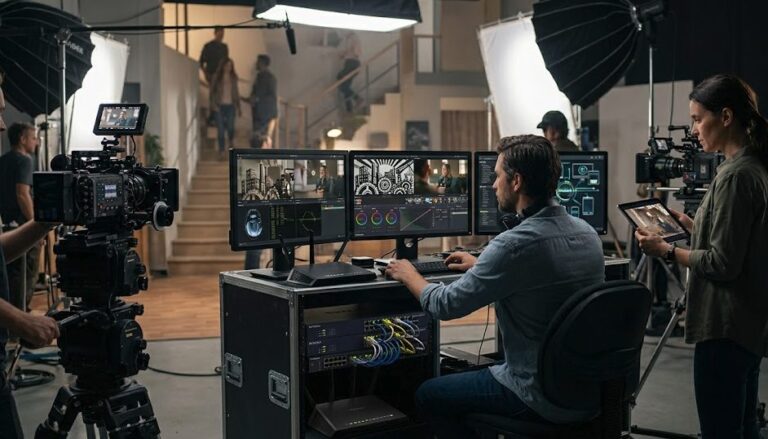
Filmmakers have long focused on the visual elements that define their craft—lens quality, lighting ratios, and color grading—but increasingly, what happens behind the scenes is just as critical. Reliable on-set connectivity is no longer a luxury; it’s a foundational requirement for modern production workflows. As remote collaboration, real-time monitoring, and instant file sharing become standard, delays caused by poor network performance can disrupt schedules and inflate costs.
The shift reflects broader industry trends where creators depend on seamless data transfer between cameras, monitors, editing stations, and cloud services. Without stable signal distribution and low latency, teams risk losing synchronization during shoots, especially in multi-camera or virtual production setups. This isn’t just about convenience—it directly impacts the ability to make timely creative decisions and maintain narrative consistency.
For content creators operating on tight budgets and timelines, investing in robust on-set networking infrastructure prevents costly reshoots and streamlines post-production. Whether using wireless video systems, fiber-optic backbones, or localized 5G solutions, ensuring that data moves as fast as the story unfolds is now part of the filmmaker’s essential toolkit. Ignoring connectivity isn’t just inefficient—it’s a creative risk.
In an era where speed and collaboration define competitive advantage, the gear that keeps the set connected deserves the same attention as the gear that captures the image. For creators aiming to deliver professional results consistently, the network is no longer invisible—it’s integral to the art.
Join the conversation
Load Facebook comments to read and reply using your Facebook account.
