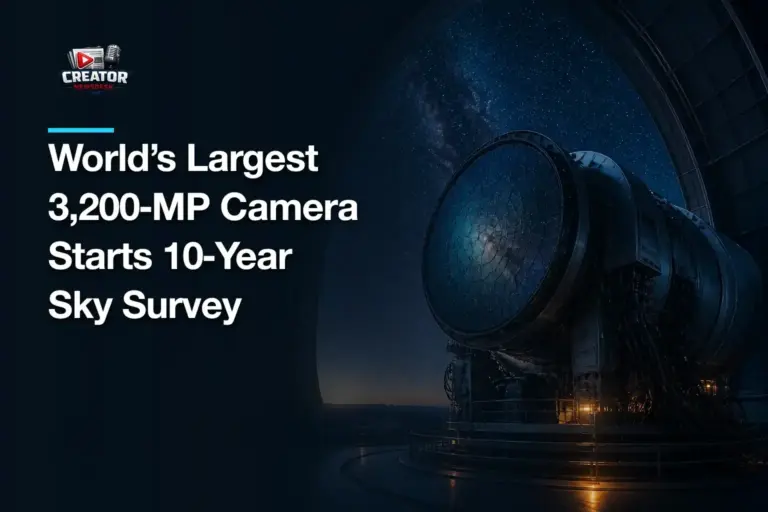
On June 30, 2026, the NSF‑DOE Vera C. Rubin Observatory officially launched the Legacy Survey of Space and Time (LSST), marking the start of a 10‑year mission to map the universe. At the heart of the survey is a monumental digital camera boasting 3,200 megapixels, designed to capture the night sky in unprecedented detail.
The camera is programmed to take approximately 700 images each night, building a continuous, high‑resolution record of celestial objects and phenomena over the full decade. This steady stream of observations will allow scientists to study transient events, track asteroid movements, and probe the nature of dark energy and dark matter on scales never before possible.
For content creators, the LSST represents a new frontier of data‑driven storytelling. The sheer volume of imagery generated will open opportunities for astrophotography timelapses, interactive visualizations, and educational series that illustrate the dynamic cosmos. Creators working with large datasets will need to consider robust storage solutions and efficient processing pipelines to handle the incoming flow of astronomical frames.
The survey’s data will be made publicly accessible, enabling independent creators to download, analyze, and remix the material for videos, podcasts, or immersive experiences. Collaborations between astronomers and digital artists could produce compelling narratives that bridge scientific discovery and public engagement, turning complex data into accessible visual content.
As the Rubin Observatory begins its watch over the sky, the initiative underscores how cutting‑edge imaging technology can serve both scientific research and the creative community, offering a rich reservoir of material for the next generation of space‑focused content.
Join the conversation
Load Facebook comments to read and reply using your Facebook account.