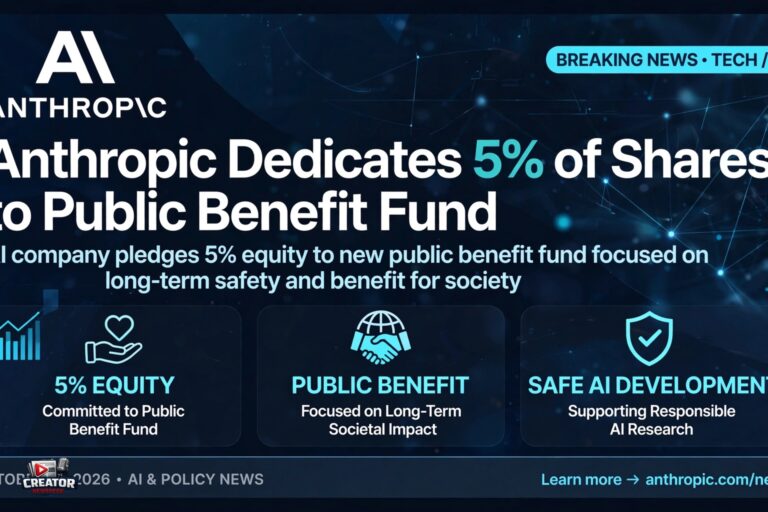
Anthropic has announced it will allocate 5% of its equity to a newly established public benefit fund, according to a report from TechCrunch dated October 18, 2026. The move reflects the company’s ongoing effort to align its growth with broader societal goals, particularly in the realm of artificial intelligence safety and accessibility. By setting aside a portion of its ownership, Anthropic aims to ensure that future value generated by its technology contributes to public interests beyond shareholder returns.
The public benefit fund is designed to support initiatives that promote responsible AI development, equitable access to AI tools, and research into long-term AI safety. While specific governance details or funding mechanisms were not disclosed in the announcement, the commitment signals a structural shift toward embedding ethical considerations into the company’s ownership model. This approach mirrors similar efforts by other tech firms exploring alternative ownership structures to balance profit with purpose.
For creators and small businesses relying on AI-powered tools, this development may influence how Anthropic’s products evolve over time. A focus on public benefit could lead to greater investment in accessible AI education, open research, or tools tailored for independent creators—though no specific product changes were outlined in the source. The company’s emphasis on long-term impact may also affect how it partners with platforms, educators, and nonprofit organizations in the creator ecosystem.
As AI continues to reshape content creation, Anthropic’s decision to tie a portion of its equity to public outcomes offers a case study in how tech companies can institutionalize accountability. While the fund’s exact operations remain to be seen, the commitment underscores a growing trend among AI leaders to formalize their responsibility to society—not just through policy statements, but through tangible equity commitments. Creators watching the AI space will want to monitor how this fund influences future product accessibility and ethical guidelines.
Join the conversation
Load Facebook comments to read and reply using your Facebook account.
