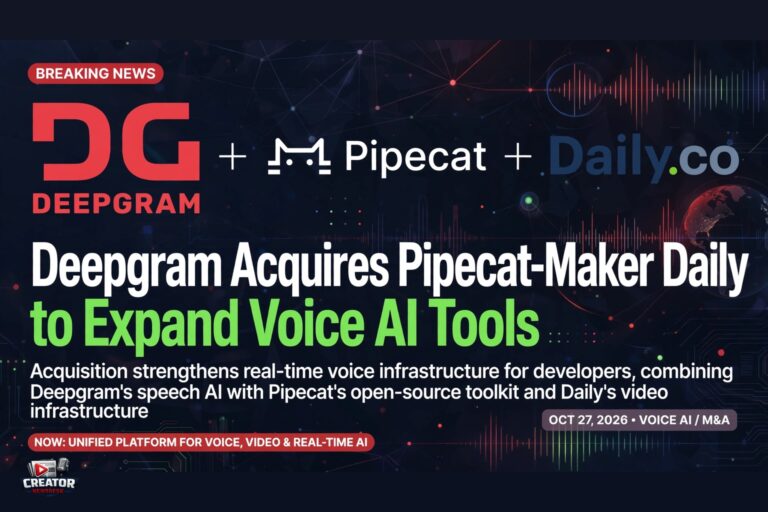
Deepgram has acquired Daily, the company behind the open-source Pipecat framework, to enhance its voice AI infrastructure and support growing demand from developers building real-time audio applications. The move signals Deepgram’s strategy to deepen its ecosystem around low-latency voice processing by integrating tools that simplify streaming audio pipelines. Pipecat, known for enabling developers to orchestrate voice agents with minimal latency, will remain open source as part of the acquisition terms—a key assurance for creators who rely on transparency and community-driven development.
By bringing Daily’s engineering team and Pipecat technology in-house, Deepgram aims to offer a more cohesive stack for building voice-powered experiences, from transcription and understanding to response generation. This integration could reduce complexity for creators deploying voice interfaces in apps, gaming, accessibility tools, and customer engagement platforms. The acquisition underscores the increasing value of open-source components in proprietary AI ecosystems, where flexibility and developer trust are critical.
Deepgram emphasized that Pipecat will continue to be developed openly, ensuring no disruption to existing projects or workflows. This commitment helps maintain trust within the developer community, especially among indie builders and startups who depend on stable, licensable foundations for innovation. Rather than absorbing and closing the project, Deepgram positions itself as a steward of Pipecat’s growth, aligning incentives between platform reliability and open collaboration.
For content creators and technologists experimenting with AI-driven voice features—such as live narration, interactive storytelling, or dynamic avatars—the acquisition may lead to better tooling, improved documentation, and tighter coupling with Deepgram’s industry-recognized speech models. While specific roadmap details were not disclosed, the focus remains on enabling faster iteration and deployment of voice-first experiences without locking users into closed systems.
The deal reflects a broader trend where AI infrastructure providers acquire niche open-source contributors to strengthen their platforms while preserving community access. As voice becomes a more central interface across digital products, investments like this aim to balance performance, usability, and openness—key factors for creators navigating the evolving landscape of generative AI and real-time media.
Join the conversation
Load Facebook comments to read and reply using your Facebook account.
