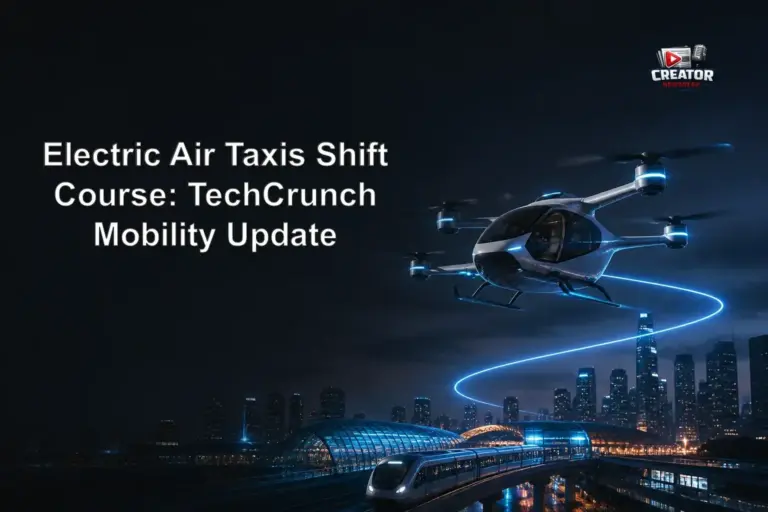
TechCrunch Mobility’s August 16, 2026 feature examines the evolving trajectory of electric air taxi operations, framing the sector’s current state as a “shifting flight path.” The piece notes that developers are no longer adhering to initial rollout plans but are instead recalibrating where and how their vehicles will fly, driven by a mix of technical learnings, regulatory feedback, and market realities.
The article highlights that many companies are revisiting vertiport locations and flight corridors after early testing revealed challenges related to airspace integration, noise considerations, and ground infrastructure readiness. Rather than pushing forward with dense urban networks, several firms are exploring suburban or peri‑urban nodes that offer simpler approval pathways while still serving key commuter flows.
On the technology side, the report discusses how advances in battery energy density and motor efficiency are influencing route feasibility. Improved powertrain performance enables longer segments between charging stops, which in turn opens possibilities for alternative flight paths that bypass congested airspace layers. Conversely, lingering limitations on fast‑charging infrastructure continue to shape where operators can reliably base their fleets.
Market dynamics also play a prominent role in the shifting narrative. The article points to fluctuating venture capital interest, evolving public‑private partnership models, and growing emphasis on equity‑focused service design as factors prompting firms to prioritize certain regions over others. Pilot programs in select cities are being used to gather data on rider demand and community acceptance before committing to larger‑scale rollouts.
For creators, the evolving flight path of electric air taxis offers fresh storytelling angles—from documenting test flights and vertiport construction to exploring the societal implications of new aerial mobility options. As the sector continues to adjust its course, staying attuned to these developments can provide timely, relevant content for audiences interested in the future of transportation.
Join the conversation
Load Facebook comments to read and reply using your Facebook account.