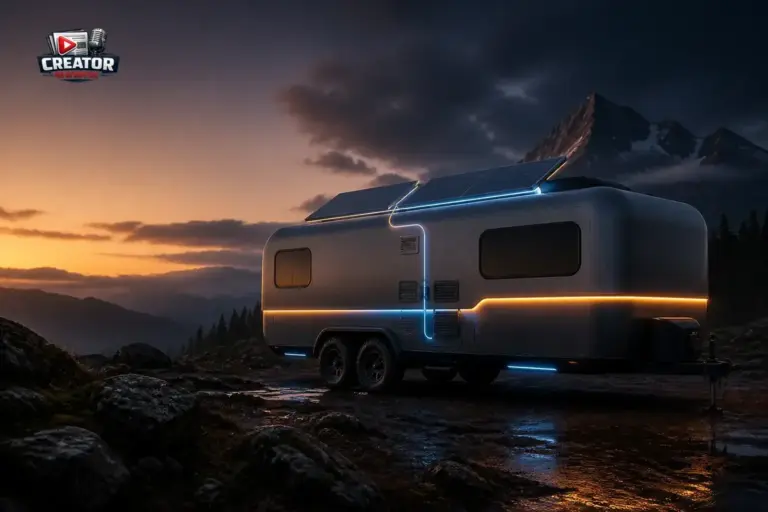
Evotrex has announced a $30 million funding round to develop a recreational vehicle that does not require a traditional charging station. The investment, reported by TechCrunch on June 9, 2026, will support the company’s effort to bring its hybrid power system to market. According to the startup’s summary, the technology is designed to allow the RV to operate far beyond typical campsite locations, offering greater independence from fixed power infrastructure.
The RV market has seen a surge of new entrants seeking to differentiate themselves through alternative energy solutions. Evotrex’s approach centers on a hybrid system that combines multiple power sources, though specific technical details have not been disclosed in the available information. The funding will be used to advance prototype development, testing, and eventual production of the vehicle.
For content creators, reliable power in remote environments is a persistent challenge. Filming on location often depends on generators, portable battery packs, or access to charging stations, all of which add logistical complexity and cost. An RV capable of sustaining operations without needing to plug into a grid could simplify production workflows, allowing creators to spend more time shooting and less time managing power logistics.
While the company has not yet shared timelines for when the vehicle will be available to consumers or professionals, the capital infusion signals confidence in the hybrid concept’s potential to address a growing demand for off‑grid mobility. Observers note that success will depend on the system’s ability to deliver consistent performance across varied terrains and climates, a factor that will be closely watched as development progresses.
Overall, Evotrex’s latest funding round highlights continued innovation in the RV sector, particularly around power autonomy. If the hybrid system delivers on its promise of extended off‑grid capability, it could appeal to a broad audience ranging from adventure travelers to professional creators seeking flexible, self‑sufficient mobile bases.
Join the conversation
Load Facebook comments to read and reply using your Facebook account.
