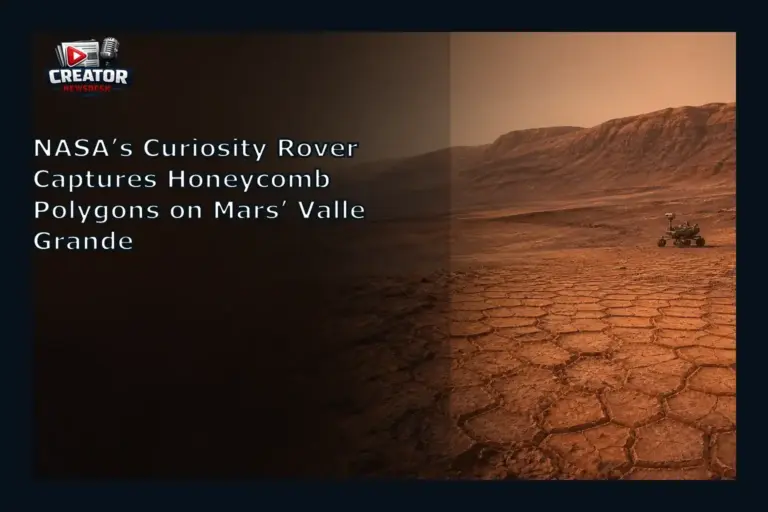
NASA’s Curiosity rover has captured striking images of a vast expanse of honeycomb-shaped polygons across the Martian terrain known as Valle Grande. The polygonal fractures, each measuring between 1.5 and 3 inches wide, form a repeating geometric pattern that resembles cracked mud or dried lake beds on Earth. These features were first observed in earlier missions, but the latest imagery provides a clearer, more extensive view of their distribution.
Scientists believe these polygons formed through repeated cycles of freezing and thawing in subsurface ice, a process common in permafrost regions on Earth. The presence of such structures suggests that Mars once had a wetter climate with seasonal temperature variations capable of driving soil contraction and expansion. Valle Grande, located within the Gale Crater where Curiosity has been operating since 2012, continues to yield valuable geological clues about the planet’s past habitability.
The discovery adds to a growing body of evidence that Mars experienced significant environmental shifts over billions of years. While the rover cannot directly analyze the subsurface ice responsible for the patterns, the surface textures serve as a proxy for understanding ancient hydrological and climatic conditions. Researchers are using the data to refine models of Mars’ evolution and assess where future missions might search for signs of past microbial life.
For content creators focused on space, science, or educational storytelling, this visual phenomenon offers a compelling narrative hook. The striking, almost artistic geometry of the polygons blends scientific intrigue with visual appeal—ideal for engaging audiences through video explainers, infographics, or social media snippets. As Mars exploration advances, findings like these underscore how robotic explorers continue to transform distant worlds into accessible, shareable stories of discovery.
Join the conversation
Load Facebook comments to read and reply using your Facebook account.
