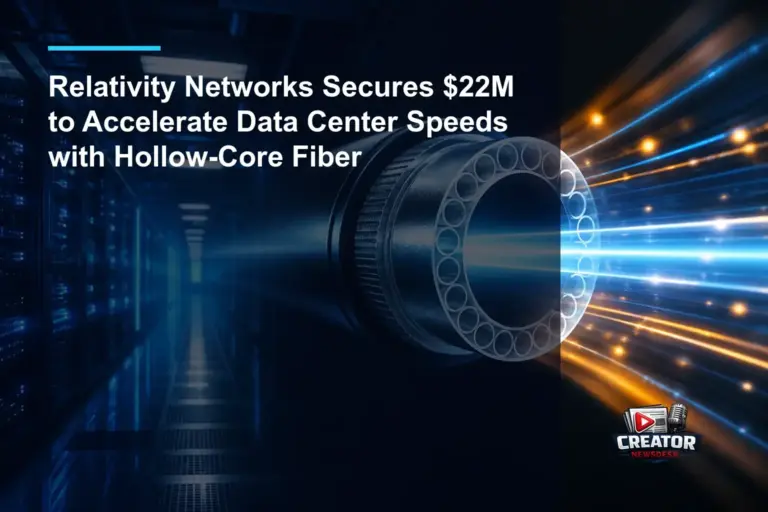
Relativity Networks has secured $22 million in funding to advance the deployment of hollow-core fiber technology in data centers. This innovative approach allows data to travel up to 30% faster than traditional solid-glass fiber by guiding light through an air-filled core, reducing latency and increasing throughput. The funding round underscores growing interest in next-generation infrastructure to support bandwidth-intensive applications.
For content creators, faster data transmission means quicker uploads, smoother real-time collaboration, and reduced lag in cloud-based editing workflows. As 8K video, virtual production, and AI-driven rendering become more prevalent, the demand for low-latency, high-capacity connections in data centers is accelerating. Hollow-core fiber offers a promising path to meet these needs without requiring a complete overhaul of existing infrastructure.
Relativity Networks aims to bridge the gap between experimental technology and practical deployment, focusing on scalable solutions for enterprise and hyperscale data centers. The company’s progress could influence how media studios, streaming platforms, and creative agencies architect their backend systems in the coming years.
While hollow-core fiber remains niche due to manufacturing complexity and cost, recent advancements are improving its viability. The $22 million investment will support further development, testing, and early-stage rollout, positioning Relativity Networks as a key player in the evolution of data center connectivity.
This development signals a shift toward performance-driven infrastructure upgrades that directly benefit creators who depend on speed and reliability. As the technology matures, it could become a standard component in high-performance networks powering the next generation of digital content creation.
Join the conversation
Load Facebook comments to read and reply using your Facebook account.