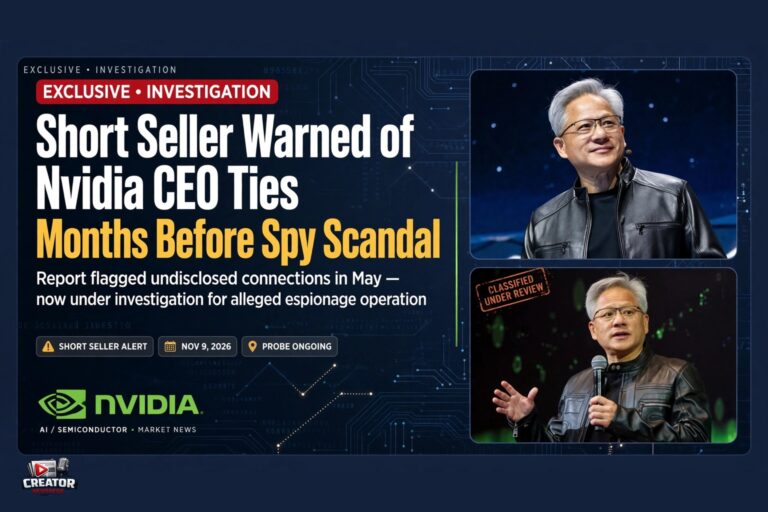
Six months before Nvidia’s spy scandal became public, short seller Culper Research had already flagged concerns about CEO Jensen Huang’s unusually close relationship with a Chinese executive. According to a TechCrunch report dated November 9, 2026, the firm’s early warning highlighted potential risks tied to Huang’s connections, which later came under scrutiny amid allegations of espionage involving Nvidia technology. The disclosure underscores how financial analysts can sometimes precede mainstream media in identifying geopolitical and corporate governance red flags. For content creators in the tech space, this timeline offers a case study in due diligence, especially when covering companies with deep global supply chains and international partnerships. While the source does not detail the nature of the executive’s role or specific allegations, it emphasizes that Culper Research’s alert predated the scandal by half a year — a significant window in fast-moving tech narratives. Creators should note that such early signals, though not proof of wrongdoing, can inform deeper investigative reporting on corporate transparency and national security implications. The episode also raises questions about how short sellers influence market perception and whether their research should be weighed more seriously in tech journalism. As Nvidia remains a cornerstone of AI innovation, understanding the interplay between leadership relationships, foreign ties, and investor skepticism is critical for creators aiming to deliver nuanced, well-sourced analysis. This incident serves as a reminder that vigilance around executive conduct and global affiliations is not just relevant to investors — it matters to anyone shaping public understanding of tech’s evolving landscape. Always cross-check claims with verified developments, but recognize that early warnings from financial researchers can sometimes point toward stories worth pursuing.
Join the conversation
Load Facebook comments to read and reply using your Facebook account.
