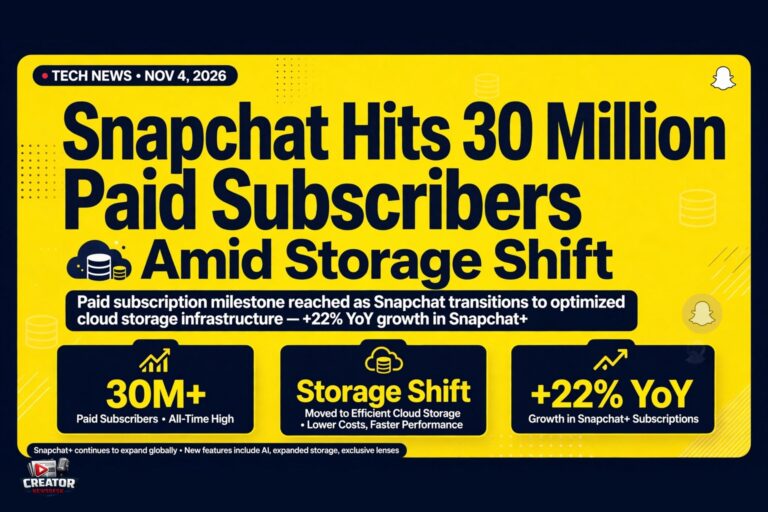
Snapchat has surpassed 30 million paid subscribers, according to a TechCrunch report dated November 4, 2026. The milestone marks a significant growth point for the platform’s premium offerings, coming just over a year after Snapchat implemented a controversial change to its Memories feature. In late 2025, the company announced it would impose limits on free storage for Memories, notifying users that they would need to either pay $1.99 per month for additional storage or subscribe to Snapchat+ to retain access to their saved content.
This shift represented a pivotal moment in Snapchat’s strategy to monetize user-generated content and deepen engagement with its most active creators. By tying access to personal archives—a core function for many content creators who rely on Memories to store and repurpose snaps—Snapchat encouraged migration to its paid tiers. The move aligns with broader industry trends where social platforms are leveraging utility-based features to drive subscription revenue.
For creators, the development underscores the growing importance of owning and controlling digital assets on social platforms. As free storage becomes more restricted, investing in platform-specific subscriptions may become necessary to maintain workflow continuity and access to historical content. Snapchat’s ability to convert a substantial portion of its user base into paying subscribers highlights the viability of value-driven monetization models when tied to essential creator tools.
The 30 million subscriber figure reflects not only adherence to the new storage policy but also potential uptake of Snapchat+’s additional features, such as custom app icons, story rewatch indicators, and priority support. While the exact breakdown between storage-only payments and full Snapchat+ subscriptions isn’t detailed in the source, the milestone signals strong creator and user acceptance of the platform’s evolving business model.
As social media platforms continue to refine their monetization strategies, Snapchat’s trajectory offers a case study in balancing user experience with sustainable revenue generation—particularly for creators who depend on reliable, long-term access to their content libraries. This development warrants close attention from those building careers around ephemeral and visual storytelling formats.
Join the conversation
Load Facebook comments to read and reply using your Facebook account.
