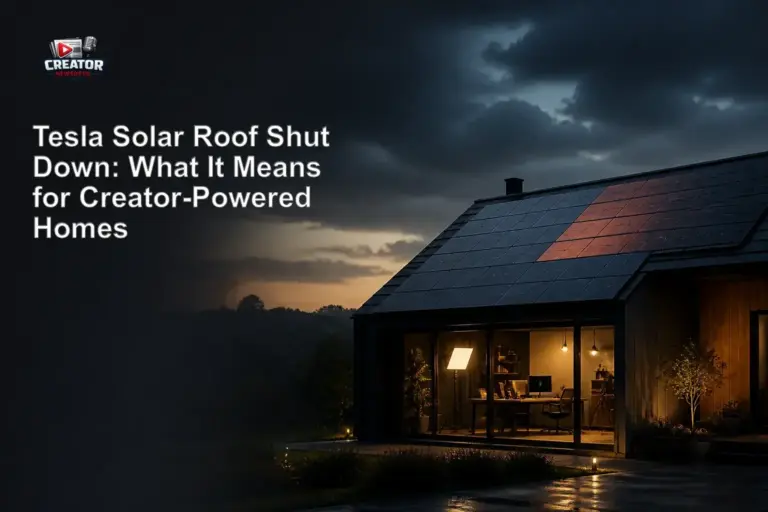
Tesla has officially discontinued its Solar Roof product line, marking the end of a high-profile attempt to merge roofing with solar energy generation. According to a TechCrunch report dated August 21, 2026, the initiative, once touted as a revolutionary leap in residential solar, failed to gain significant traction due to persistent challenges in cost, installation complexity, and performance consistency. While the Solar Roof promised a seamless aesthetic alternative to traditional solar panels, its high price point and lengthy deployment timelines limited adoption, especially among cost-sensitive homeowners and small-scale creators relying on home-based studios.
For content creators who depend on reliable, off-grid, or sustainable power for editing suites, lighting rigs, and gear charging, the demise of Tesla’s Solar Roof raises questions about the viability of building-integrated photovoltaics (BIPV) as a mainstream solution. Though Tesla’s specific approach has ended, the broader concept of solar-integrated roofing remains active across the industry, with competitors like CertainTeed, GAF Energy, and SunStyle continuing to refine more affordable and scalable options. These alternatives may offer better value for creators seeking to reduce long-term energy costs without sacrificing roof aesthetics or increasing maintenance burdens.
The shutdown also highlights a shift in Tesla’s energy strategy, with the company refocusing on its more established Powerwall battery storage and standard solar panel offerings — products that have seen stronger adoption due to lower upfront costs and broader installer networks. For creators already invested in Tesla’s ecosystem, this means continued support for Powerwall integrations but fewer options for a fully integrated solar roof solution.
While the Tesla Solar Roof experiment didn’t scale as hoped, it did push innovation in the solar space, prompting improvements in durability, efficiency, and design across the market. For creator-entrepreneurs building sustainable home studios or eco-conscious brands, the takeaway is clear: roof-integrated solar isn’t dead — it’s evolving. The next generation of solutions may arrive not from a single automaker’s moonshot, but from specialized solar manufacturers listening to the real-world needs of power-dependent professionals working from home.
Join the conversation
Load Facebook comments to read and reply using your Facebook account.
