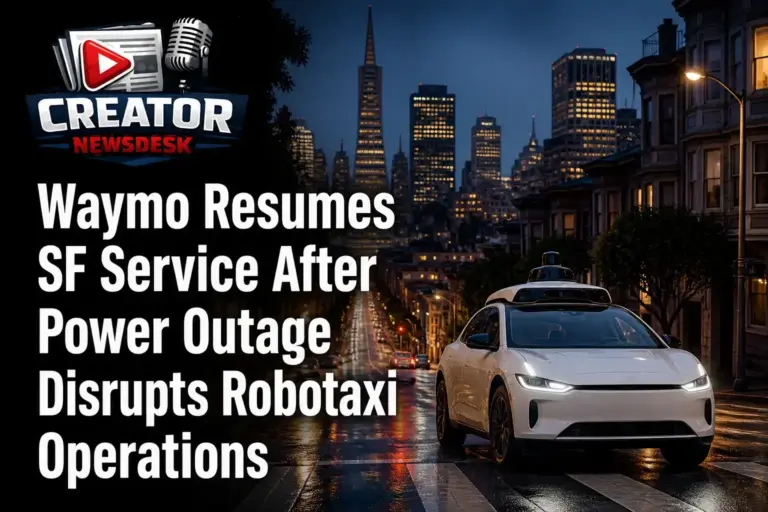
Waymo has confirmed that its robotaxi service in San Francisco has resumed operations after a temporary one-hour pause caused by a localized power outage. The disruption, reported on July 18, 2026, affected service availability in parts of the city where Waymo’s autonomous vehicles rely on consistent electrical infrastructure for charging, communication, and fleet management.
This marks another instance where external power issues have interrupted Waymo’s operations in San Francisco, a city that has served as a key testing and deployment ground for its driverless technology. While the company did not disclose the exact number of vehicles impacted or the specific neighborhoods affected, it emphasized that safety systems remained fully functional throughout the event and no incidents were reported.
For content creators covering the autonomous vehicle space, this event underscores the ongoing vulnerability of even advanced robotaxi networks to urban infrastructure dependencies. Unlike consumer EVs that can rely on individual charging habits, fleet-based autonomous services like Waymo’s require grid-stable depots and real-time data links—both of which can be compromised during outages.
Waymo has not announced any changes to its operational protocols in response to the incident, but the recurrence of such disruptions may prompt further investment in backup power solutions or grid-resilient charging hubs. The company continues to expand its SF footprint, having recently opened access to more riders through its public app.
As autonomous mobility scales, creators should monitor how companies like Waymo balance innovation with real-world contingencies—especially in dense, aging urban centers where power reliability remains uneven. This pause, though brief, serves as a reminder that the path to driverless adoption runs through more than just AI and sensors—it runs through the power grid too.
Join the conversation
Load Facebook comments to read and reply using your Facebook account.