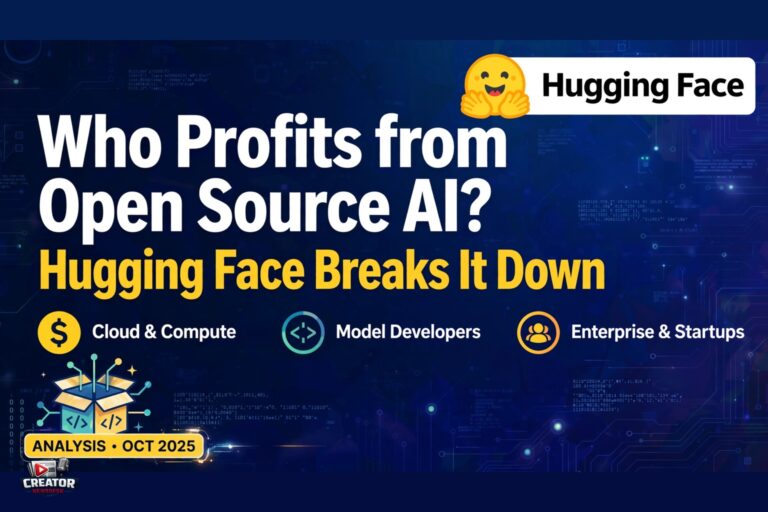
Open source artificial intelligence is rapidly moving into the mainstream, with enterprises, government agencies, and startups adopting freely available models to reduce costs, increase control, and gain technical flexibility. As these models grow more powerful and accessible, questions arise about how companies actually derive value from them. While the software itself may be free, the real economic opportunity lies in the ecosystem built around it — including customization, integration, support, and deployment services. Hugging Face, a central hub for open source AI models, highlights that value capture now happens not through licensing the models directly, but through enabling businesses to adapt and scale them efficiently. This shift benefits content creators who can leverage fine-tuned models for tasks like video editing, script generation, and asset creation without relying solely on proprietary platforms. The rise of competitive open models from global contributors, including notable advancements from Chinese research labs, further accelerates innovation and lowers barriers to entry. For creators and small teams, this means access to cutting-edge AI tools previously limited to large tech firms. However, sustainability depends on viable business models that reward contribution while keeping core tools accessible. As the open source AI landscape matures, understanding where value flows — from infrastructure providers to application developers — becomes essential for anyone building or monetizing AI-powered creative workflows. The trend signals a broader democratization of AI, where openness drives both innovation and opportunity across the creator economy.
Join the conversation
Load Facebook comments to read and reply using your Facebook account.
