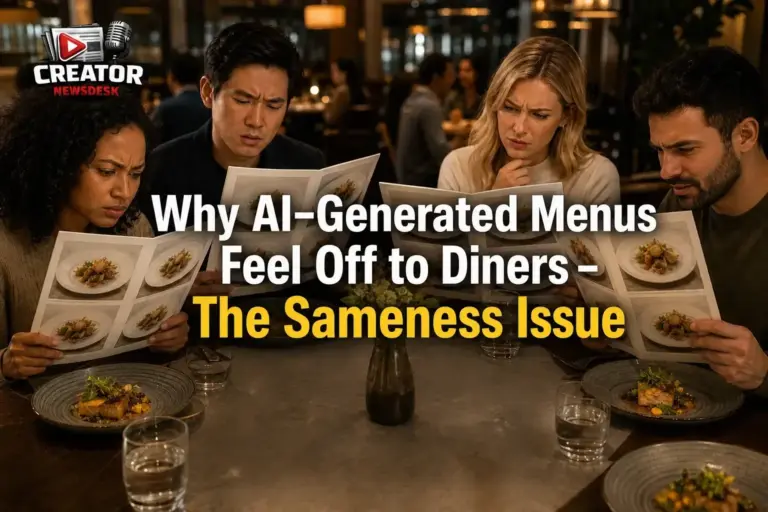
Restaurant owners are increasingly turning to generative AI as a quick way to refresh their menus, hoping to save time and spark new ideas. The technology can produce dish descriptions, names, and layout suggestions with minimal effort, making it an attractive shortcut for busy operators.
However, the source highlights a notable downside: AI‑generated content often falls into a pattern of sameness. Because the models learn from vast datasets of existing menu language, they tend to reuse similar phrasing, structure, and tropes, resulting in menus that feel generic and lack a distinct voice.
Customers may not be able to articulate exactly what feels wrong, but they can viscerally sense that something is off when reading these AI‑crafted menus. This intuitive discomfort can affect appetite, diminish trust in the establishment, and ultimately influence dining decisions.
For creator‑business operators in the food space, relying heavily on AI for menu creation risks eroding the unique brand identity that differentiates one restaurant from another. Over‑reliance on automated text may lead to a homogenized experience that fails to capture the personality or story behind the cuisine.
A balanced approach—using AI as a brainstorming aid while retaining human oversight for final copy—can help preserve authenticity. By blending machine efficiency with creative intuition, owners can enjoy the benefits of speed without sacrificing the distinctive touch that diners appreciate.
Looking ahead, addressing the sameness challenge will be crucial for AI tools aimed at the hospitality industry. Improvements that encourage varied, context‑aware output could allow restaurants to harness generative AI’s potential while keeping menus fresh, appealing, and genuinely reflective of their culinary vision.
Join the conversation
Load Facebook comments to read and reply using your Facebook account.
