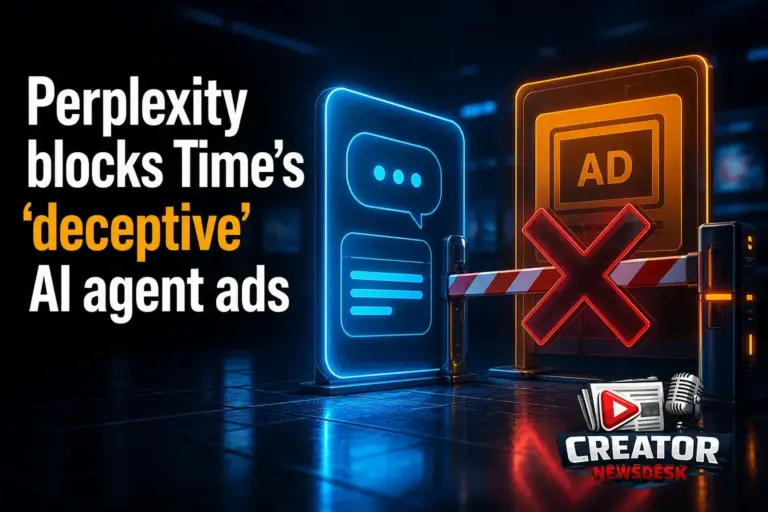
Perplexity has taken the unusual step of blocking ads served by Time magazine that were designed to influence its AI system, according to a report from Digiday. The search and answer engine described the advertisements as "deceptive," marking one of the first high-profile conflicts between a major publisher and an AI platform over the emerging practice of agent-directed advertising.
The ads in question were markdown-based, a format designed to be read and interpreted by AI agents rather than human eyeballs. In essence, Time appears to have been attempting to shape how Perplexity's system surfaces or references its content in AI-generated answers. Perplexity responded by actively blocking them, signaling that it will not tolerate third-party content attempting to silently steer its model outputs.
For content creators, this skirmish is more significant than it may first appear. As AI assistants become a primary gateway for content discovery, publishers and independent creators alike are experimenting with ways to ensure their work gets cited or recommended. Markdown agent ads represent a new frontier in that effort—a way to speak directly to the machines that, increasingly, speak to audiences. But as Perplexity's response demonstrates, platforms are pushing back against what they see as manipulation of their systems.
The broader implication is that the rules of engagement between content producers and AI platforms are still being written. While traditional SEO optimized for Google's crawlers, a new discipline—sometimes called "AEO" or answer engine optimization—is emerging for AI-era discovery. Creators who rely on being cited by AI tools will need to balance visibility strategies with the ethical lines these platforms are drawing.
Perplexity's decision also raises questions about transparency and consent in agent-to-agent communication. When one AI system silently ingests instructions embedded in another's content, who holds the authority to accept or reject that influence? The answer, for now, appears to be whichever platform controls the algorithm.
The standoff between Perplexity and Time is likely just the opening salvo in a longer negotiation. As more publishers develop strategies to court AI systems, expect platforms to formalize their policies on what constitutes acceptable influence—and what crosses into deception. For creators, watching these boundaries form now will be essential for staying ahead of the curve.
*This article is based on reporting from Digiday, published August 11, 2026.*
Join the conversation
Load Facebook comments to read and reply using your Facebook account.