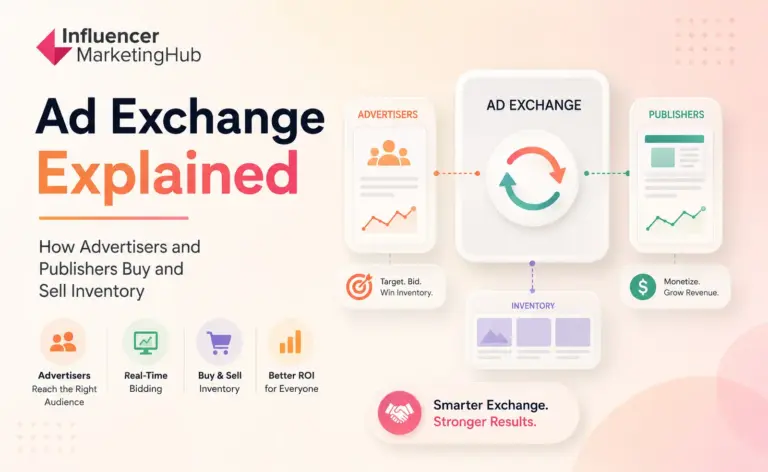
Ad exchanges are automated marketplaces where advertisers bid to buy ad space from publishers in real time. For creators, this system underpins much of the programmatic advertising seen across blogs, YouTube, and social platforms. While the mechanics involve demand-side platforms (DSPs) and supply-side platforms (SSPs), the core function is matching ad inventory with buyer demand through real-time bidding (RTB).
For creators, understanding ad exchanges isn’t just about tech—it’s about monetization control. When your content is monetized via programmatic ads, you’re often indirectly participating in an ad exchange ecosystem. This can affect CPM rates, ad relevance, and even brand safety, as ads are served automatically based on viewer data and bidding dynamics.
Sponsorships and direct brand deals operate outside this system, but ad exchanges influence the broader advertising landscape creators navigate. Knowing how inventory is valued and sold helps creators assess whether platform-driven ad revenue aligns with their audience trust and content goals.
Legal risk and platform policy also intersect with ad exchanges. Creators must ensure their content complies with platform rules that govern ad eligibility, as violations can lead to demonetization or exclusion from ad-serving systems. Transparency about how ads are served—especially regarding data use—is increasingly expected by audiences.
While ad exchanges offer scale and efficiency, they come with trade-offs: less direct control over ad creatives, potential for low-quality or irrelevant ads, and reliance on opaque algorithms. Creators who prioritize audience trust may opt for fewer, higher-value sponsorships over reliance on programmatic ad revenue.
Ultimately, ad exchanges are a backend tool in the advertising supply chain. For creators, the business takeaway is clear: know how your ad revenue is generated, evaluate its impact on your brand, and decide whether programmatic fits your long-term monetization strategy.
Join the conversation
Load Facebook comments to read and reply using your Facebook account.