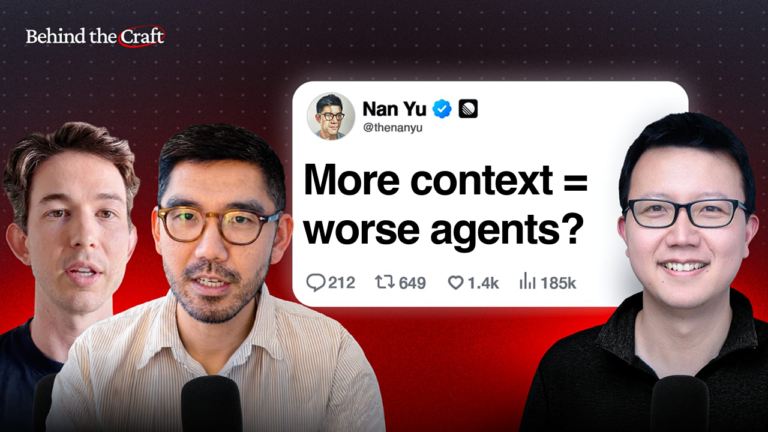
The gap between a demo AI agent and one that survives contact with real workflows is wider than most creators realize. In a deep-dive published by Creator Economy on August 9, 2026, Nan Yu and Jacob Shumway offer a behind-the-scenes look at what it actually takes to build a production AI agent end to end. The rules they outline carry direct implications for creators automating research, editing, or community management.
The article's core emphasis: context is everything. Successful production agents don't lean on a model's training data alone — they're given tools to actively find the context they need. For content creators, that signals a shift beyond simple prompt engineering. An agent that can retrieve relevant information before generating output is fundamentally different from one working from a blank slate.
The second pillar highlighted in the summary is evaluation. The piece stresses using evals to measure output quality, a practice still uncommon among creators adopting AI tools. Instead of judging performance by a single strong sample, evals establish a repeatable system: run the agent against defined test cases, score the results, and iterate. That turns AI tooling from a gamble into a disciplined engineering practice.
The creator-business angle is clear. Anyone building a custom AI workflow — a research assistant for video scripts, a repurposing engine for short-form clips, a response bot for comments — will eventually hit the production gap. Agents that ace a demo but degrade in real use are the norm, not the exception. The rules laid out by Yu and Shumway are aimed squarely at that problem
Join the conversation
Load Facebook comments to read and reply using your Facebook account.
