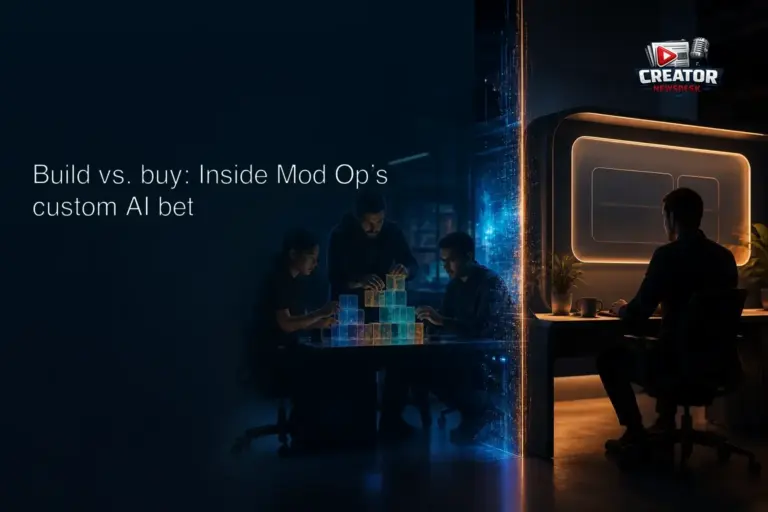
Independent agency Mod Op is making a deliberate wager: that custom-built AI infrastructure will ultimately deliver more value for its clients than simply licensing off-the-shelf tools. As reported by Digiday on August 12, 2026, the agency is betting its internal engineering effort can outpace the convenience of subscription-based AI products. For content creators and creator-economy businesses, the strategic reasoning behind that bet is worth examining.
The build-versus-buy question has become central to content operations. Off-the-shelf AI tools offer speed, lower upfront costs, and constant updates from vendors. But they also come with limitations: generic outputs, shared data pipelines, and pricing structures that scale with usage. Mod Op's position suggests that for agencies and creators with complex, repeatable workflows, a bespoke infrastructure can be tailored to specific brand voices, editorial calendars, and client requirements in ways a one-size-fits-all product cannot.
Building in-house also offers a different kind of control. Custom AI infrastructure can be designed around proprietary data, ensuring that content models are trained on the creator's own archive and style guidelines rather than broad internet scrapes. That can lead to more consistent output, tighter intellectual property protections, and workflows that integrate directly into existing production pipelines — from ideation to publishing to performance analysis.
However, that control comes at a price. A custom stack requires engineering talent, ongoing maintenance, and continuous tuning as both the underlying models and the creator's needs evolve. Licensing tools shifts that burden to vendors but leaves creators dependent on someone else's roadmap. The trade-off is ultimately about priorities: immediate flexibility versus long-term differentiation.
For creators, the lesson from Mod Op's approach is not that everyone should start coding their own AI stack. Rather, it is that the default choice — paying for the most popular tool — deserves scrutiny. A mid-size channel or agency might benefit from a hybrid path: using off-the-shelf tools for general tasks while gradually building custom automations for their most repetitive, high-ROI work. The right answer depends on scale, technical capacity, and how much competitive advantage derives from a distinct creative process.
Join the conversation
Load Facebook comments to read and reply using your Facebook account.