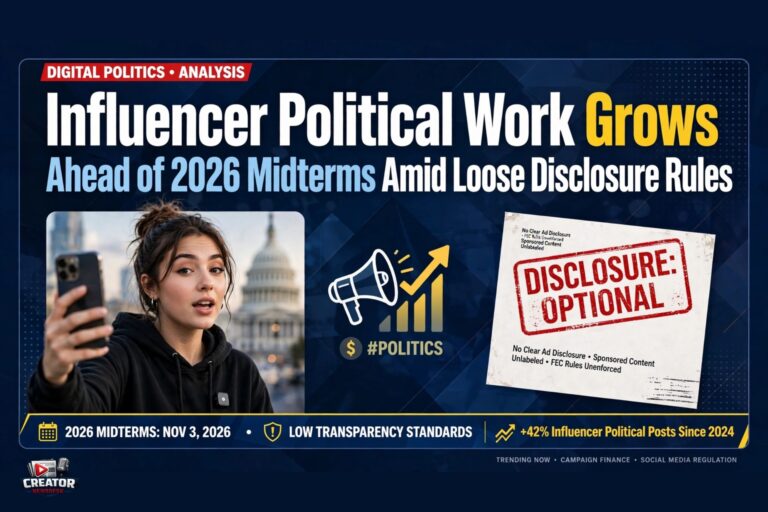
Campaigns are increasingly turning to social media creators to reach voters in the 2026 midterm elections, according to Digiday reporting. As traditional ad spaces grow crowded and expensive, political teams see influencers as a way to deliver targeted messages through trusted voices — especially among younger and niche audiences. This shift reflects a broader trend where political communication mirrors commercial influencer tactics, blurring the line between advocacy and endorsement.
But the business side for creators comes with mounting risks. Federal disclosure rules for political advertising online remain inconsistent and poorly enforced, leaving influencers unsure how to label sponsored content from campaigns or PACs. Unlike brand deals, political sponsorships often lack clear contracts, payment transparency, or guidance on what constitutes election interference versus free speech. That ambiguity increases legal exposure, especially if content is later deemed misleading or coordinated illegally with a campaign.
Audience trust is also at stake. Voters are growing wary of political messaging that feels inauthentic or covertly funded. Creators who fail to disclose paid political work risk backlash, follower loss, or platform penalties under evolving misinformation policies. Meanwhile, platforms like YouTube, TikTok, and Instagram have not updated their political ad disclosure tools to match the rise of creator-led campaign outreach, creating a gap between policy and practice.
For creators considering political work in 2026, the calculus is shifting. While some may see high-paying opportunities to amplify causes they support, others are weighing the long-term reputational cost. Without stronger rules or industry standards, the decision to engage remains a personal risk assessment — one that could affect not just income, but credibility in an increasingly skeptical public square.
Join the conversation
Load Facebook comments to read and reply using your Facebook account.
