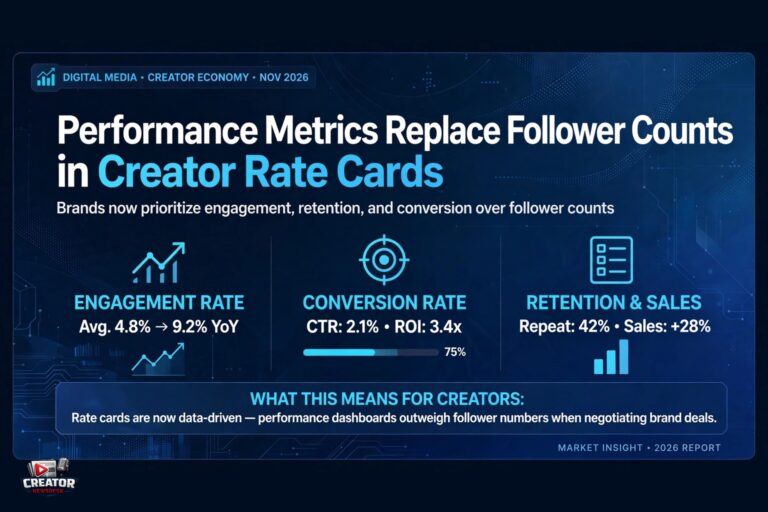
Advertisers are increasingly requiring performance-based metrics such as cost per lead and conversion rates when negotiating creator partnerships, according to reporting from Digiday. This shift marks a move away from relying solely on follower counts or engagement rates as the primary basis for setting creator fees. Instead, brands are focusing on measurable outcomes tied directly to campaign goals.
The change reflects growing pressure on marketers to justify influencer spend with clear return on investment. As advertising budgets tighten, companies are demanding that creator collaborations deliver trackable results, such as sign-ups, purchases, or other defined actions. Creators who can demonstrate consistent performance in these areas are gaining leverage in rate negotiations.
This evolution is reshaping how creator rate cards are structured. Rather than flat fees based on audience size, more agreements now include performance incentives or base-plus-bonus models tied to specific KPIs. Agencies and platforms are adapting by offering better tracking tools and transparent reporting to meet advertiser expectations.
For creators, the trend underscores the importance of understanding their audience’s behavior and optimizing content for action, not just reach. Those who align with niche communities and drive measurable responses are better positioned to thrive in this performance-driven landscape. The shift benefits both parties when transparency and accountability are prioritized.
As of November 9, 2026, the creator economy continues to mature, with data-driven partnerships becoming the new standard. Creators who invest in analytics and campaign optimization will be best equipped to meet evolving advertiser demands.
Join the conversation
Load Facebook comments to read and reply using your Facebook account.
