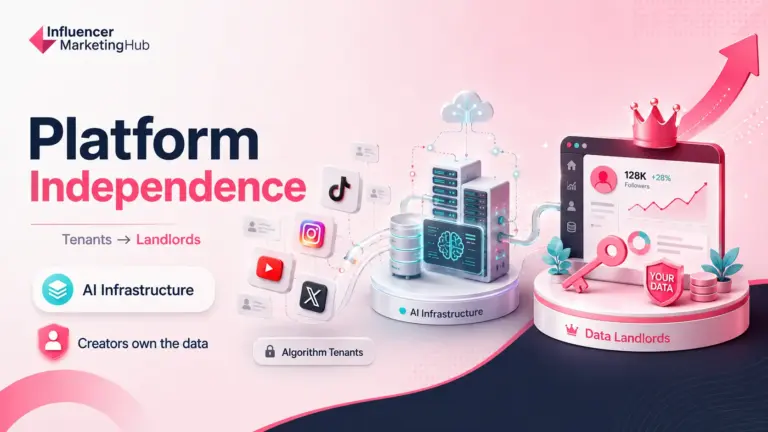
A new framework from Influencer Marketing Hub suggests the creator economy is undergoing a structural shift: moving from "algorithm tenants"—creators who effectively rent visibility by feeding platform feeds—to "data landlords," who own their audience data outright through AI infrastructure. The framing, published August 5, 2026, is more than a metaphor. It maps directly to how creators generate revenue and how vulnerable that revenue is to platform decisions.
For monetization, the stakes are obvious. Renting an algorithm means your income depends on feed changes, shadowbanning, and arbitrary payout adjustments—risks that have wiped out sponsorships and ad revenue overnight for many creators. Owning your data, in theory, allows you to take your audience relationship with you, sell sponsorships on your own terms, and build direct monetization pipelines that don't route through a platform's ad server. That's a genuinely stronger negotiating position with brands.
But skepticism is warranted here. "Data ownership" is a slippery legal concept, and the source material doesn't spell out which legal frameworks make this real. If a creator's data is scraped, exported, or synced from platforms, the underlying terms of service may still govern what you can do with it. Being a "data landlord" can quickly become renting a data warehouse from an AI provider—a new dependency that replaces one middleman with another.
There's also the audience-trust and legal-risk angle. Holding first-party data on your fans is valuable, but it carries obligations. Privacy regulations, consent requirements, and data breach liabilities don't go away just because you've moved off-platform. Sponsors will pay a premium for verified, owned audiences, but they will also audit your data practices. If you're going to claim landlord status, you need contracts and compliance in place first.
The practical takeaway for creators: treat this as an infrastructure decision, not a buzzword. Test AI tools that centralize your audience data, but demand clarity on who owns what, where the data physically resides, and what happens if the AI vendor changes its pricing model. Platform independence is a business hedge, not a legal guarantee—and it only pays off if the data you're keeping is clean, consented, and portable.
Join the conversation
Load Facebook comments to read and reply using your Facebook account.