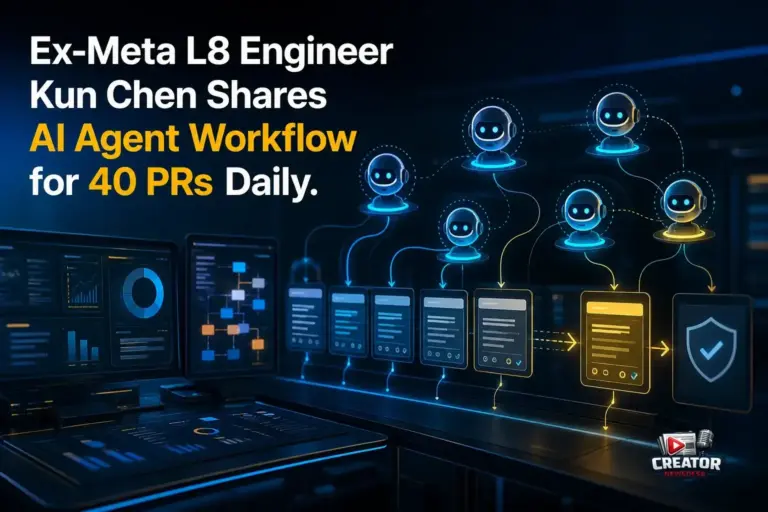
Kun Chen, a former Meta L8 engineer, recently demonstrated how he has shifted away from manual code review to an AI‑driven development process. In a 60‑minute explanation titled “Agentic Engineering, Clearly Explained,” he walks viewers through the system he now relies on to plan, build, and validate software changes. The core of his approach involves deploying AI agents that handle the repetitive steps of coding, testing, and integration, while he focuses on higher‑level design decisions.
He emphasizes that the entire pipeline is built using free, open‑source tools, which eliminates licensing costs and makes the workflow accessible to other developers. By letting the agents take on the bulk of the validation work, Kun no longer spends time reviewing each line of code manually. Instead, he oversees the agents’ output, ensuring that the generated pull requests meet the project’s standards before they are merged.
The result of this agentic engineering method is a measurable increase in output: Kun reports that he is able to ship approximately 40 pull requests each day. This figure is highlighted in the video as a concrete example of how automation can scale a developer’s daily throughput without sacrificing quality. The 60‑minute format provides a walk‑through of the tooling setup, agent configuration, and the validation checks that keep the process reliable.
For creator‑economy professionals who also write code—whether for plugins, themes, or custom integrations—this workflow offers a practical blueprint for reducing manual overhead. By adopting similar AI‑agent pipelines, creators can allocate more time to content production, community engagement, or experimenting with new features, while still maintaining a steady flow of software updates. The open‑source nature of the tools means there is no financial barrier to experimentation, encouraging a broader range of creators to explore agent‑assisted development.
Overall, Kun Chen’s demonstration underscores a growing trend in software engineering where autonomous agents handle routine tasks, allowing human engineers to focus on creative and strategic work. For developers who also create content, embracing such agentic workflows could become a key lever for sustaining high productivity and rapid iteration in an increasingly competitive landscape.
Join the conversation
Load Facebook comments to read and reply using your Facebook account.